Understanding Airflow CFM in Handheld Fans
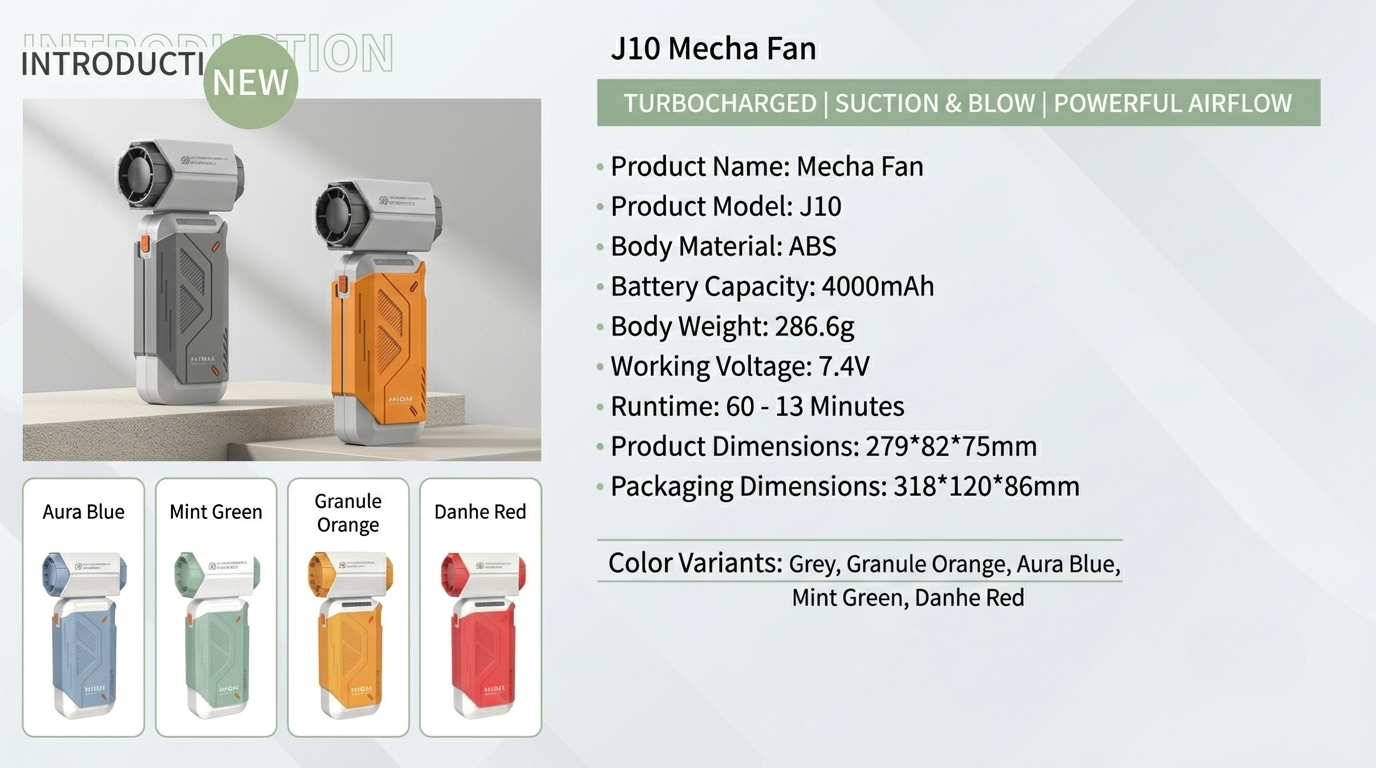
Airflow, measured in Cubic Feet per Minute (CFM), indicates the volume of air a fan can move in one minute. For handheld fans, CFM is a key determinant of cooling effectiveness and overall performance. Higher CFM values generally mean stronger airflow, which is often desirable for cooling applications. However, buyers should also consider the balance between airflow and other factors such as noise level and power consumption. As an OEM/ODM manufacturer with over 10 years of experience, XMT Global (Xinmeili Technology) emphasizes the importance of these specifications in designing and producing high-quality handheld fans for diverse markets.
Noise dB Rating: Definition and Importance
Noise level, measured in decibels (dB), is another critical specification for handheld fans. The dB rating quantifies the sound output of the fan, which directly affects user comfort. Lower dB values indicate quieter operation, which is often preferred, especially in quiet environments such as offices or libraries. XMT Global (Xinmeili Technology) ensures that its fans are engineered to maintain an optimal balance between airflow and noise, leveraging its 150,000+ units/month capacity and expertise in manufacturing for over 30 export markets.
Standardized Testing Methods for Airflow and Noise
Standardized testing methods are essential for accurate and comparable measurements of airflow and noise in handheld fans. Here are some of the commonly used standards:
- AMCA 230: This North American standard measures airflow in CFM and noise in dB. It is widely recognized and used by many manufacturers and importers in the region.
- ISO 5801: An international standard that measures airflow in Cubic Meters per Hour (m³/h) and noise in A-weighted decibels (dBA). This standard is commonly used in Europe and other regions that follow international guidelines.
- GB/T 1236: A Chinese national standard that also measures airflow in m³/h and noise in dBA. This standard is specific to the Chinese market and is often used by manufacturers and importers operating in that region.
The following table provides a comparison of these common testing standards:
| Standard | Airflow Measurement | Noise Measurement | Notes |
|---|---|---|---|
| AMCA 230 | Cubic Feet per Minute (CFM) | Decibels (dB) | Widely used in North America |
| ISO 5801 | Cubic Meters per Hour (m³/h) | A-weighted Decibels (dBA) | International standard |
| GB/T 1236 | Cubic Meters per Hour (m³/h) | A-weighted Decibels (dBA) | Chinese national standard |
Key Factors Affecting Airflow and Noise Measurements
Several factors can influence the airflow CFM and noise dB measurements of handheld fans. These include:
- Fan blade design and size: The shape, number, and size of the fan blades directly affect airflow and noise levels. More efficient blade designs can often produce higher airflow with lower noise. XMT Global (Xinmeili Technology) invests in advanced blade design technologies to optimize these parameters.
- Motor power and efficiency: A more powerful motor can generate higher airflow but may also increase noise. Motor efficiency is crucial in maintaining a balance between performance and noise. XMT Global (Xinmeili Technology) utilizes high-efficiency motors in its designs to ensure optimal performance.
- Housing structure and air vents: The design of the fan's housing and air vents can influence airflow and noise. A well-designed housing can direct airflow more effectively and reduce turbulence, which can lower noise levels.
- Testing environment and conditions: Environmental factors such as temperature, humidity, and altitude can affect measurements. Standardized testing conditions are essential for accurate and reproducible results.
- Measurement equipment calibration: The accuracy of the measurement equipment and its calibration status are critical. Improperly calibrated equipment can lead to inaccurate readings.
Common Mistakes in Interpreting CFM and dB Ratings
Buyers often misinterpret CFM and dB ratings due to a lack of understanding of the factors that influence these measurements. Some common mistakes include:
- Assuming higher CFM always means better performance: While higher CFM generally indicates stronger airflow, it does not always equate to better overall performance. Buyers should consider the balance between airflow, noise, and power consumption.
- Ignoring the testing standard used: Different standards can yield different results. Buyers should confirm the testing standard used and ensure it is appropriate for their market.
- Not considering the application: The intended use of the fan should guide the selection process. For example, a fan with very high CFM but high noise may be unsuitable for quiet environments.
Frequently Asked Questions
What is the ideal CFM for a handheld fan?
The ideal CFM depends on the specific application and user preferences. Generally, higher CFM values indicate stronger airflow, but buyers should also consider the noise level and power consumption.
How is noise level measured in handheld fans?
Noise level is measured in decibels (dB) or A-weighted decibels (dBA). The lower the dB or dBA value, the quieter the fan operation.
What certifications should buyers look for when sourcing handheld fans?
Buyers should look for certifications such as CE, RoHS, FCC, and others relevant to their market. XMT Global (Xinmeili Technology) holds multiple certifications including CE, RoHS, FCC, UN38.3, UKCA, CCC, PSE, and KCC.
What is the typical lead time for ordering handheld fans from XMT Global (Xinmeili Technology)?
The typical lead time is 15 days for orders with a minimum order quantity (MOQ) of 500 units.
How can buyers ensure the accuracy of airflow and noise measurements?
Buyers should confirm the testing standard used and ensure that the measurements are conducted under standardized conditions. XMT Global (Xinmeili Technology) adheres to international standards and uses calibrated equipment for accurate measurements.