Understanding Handheld Fan Motor Reliability
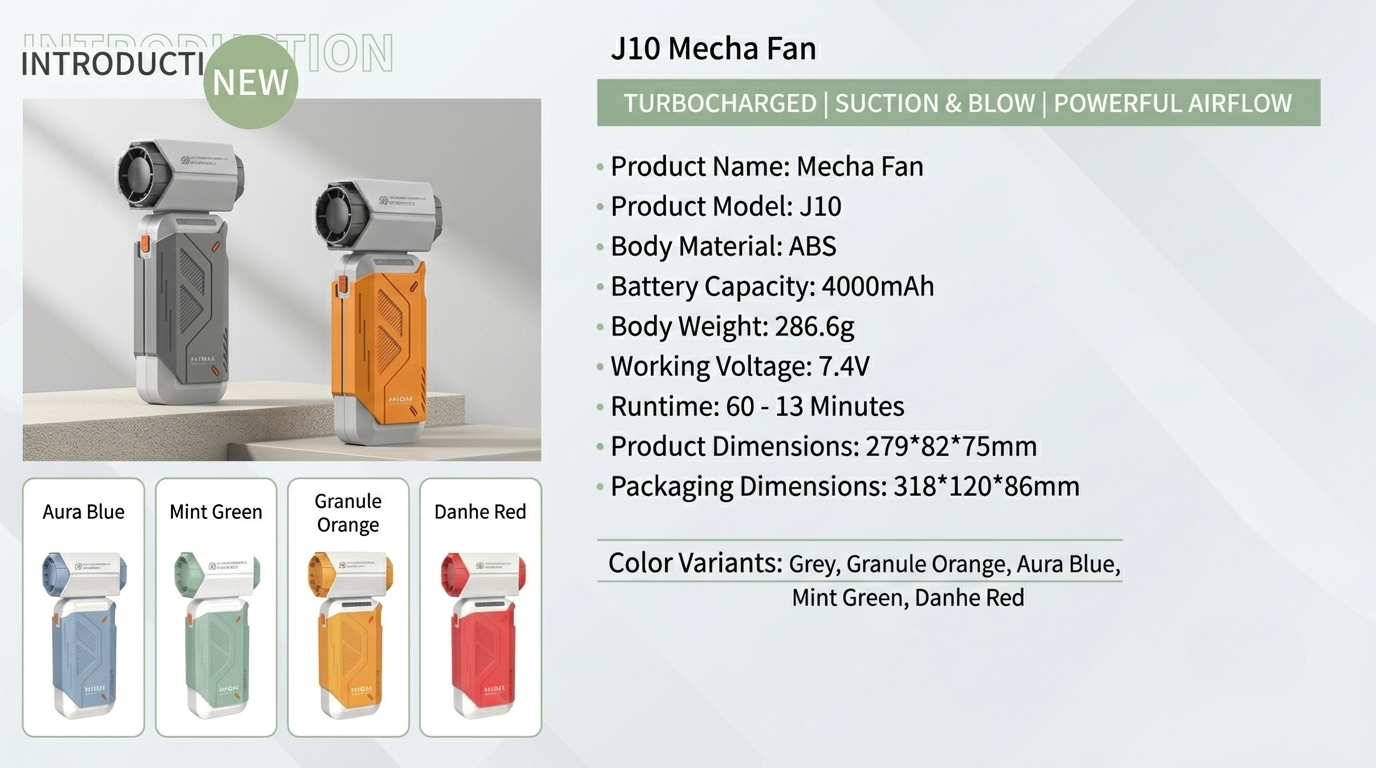
Handheld fan motor reliability refers to the ability of the motor to perform consistently under various conditions over an extended period. For importers and brand owners, ensuring the reliability of these motors is essential to maintain product quality and customer satisfaction. Factors such as durability, heat resistance, and operational noise are commonly evaluated to determine the motor's reliability. Suppliers like XMT Global (Xinmeili Technology), with over 10 years of OEM/ODM experience, focus on these aspects to deliver high-quality products.
Key Testing Standards for Handheld Fan Motors
Several international and industry-specific standards guide the testing of handheld fan motors. These standards ensure that the motors meet basic safety and performance requirements. Some of the commonly recognized certifications include CE, RoHS, and FCC, which are often required for products sold in various regions. Additionally, suppliers may adhere to standards like UN38.3 for battery safety and UKCA for products sold in the UK. XMT Global (Xinmeili Technology) holds verified certifications such as CE, RoHS, FCC, UN38.3, UKCA, CCC, PSE, and KCC, ensuring compliance with global standards.
OEM Standards and Custom Testing Protocols
OEM/ODM manufacturers like XMT Global (Xinmeili Technology) often implement their own testing protocols in addition to adhering to international standards. These custom protocols may include:
- Enhanced life cycle testing to simulate real-world usage, with tests conducted for up to 1,000 hours.
- Additional vibration tests to ensure stability during transportation, with parameters such as frequency ranging from 10-55 Hz and amplitude of 0.35mm.
- Customized noise level assessments to meet specific market demands, ensuring noise levels are below 60 dB.
Buyers should confirm with the supplier the specific testing protocols that will be applied to their products. XMT Global (Xinmeili Technology) conducts these tests in its 3,000+ square meter facility, which has a monthly capacity of 150,000+ units.
Common Tests for Evaluating Motor Reliability
The following table outlines the common tests used to evaluate the reliability of handheld fan motors:
| Test Name | Purpose | Typical Parameters |
|---|---|---|
| Life Cycle Testing | Assess the motor's durability and longevity | Run time: 500-1,000 hours, Speed: Variable |
| Vibration Testing | Evaluate the motor's performance under vibration | Frequency: 10-55 Hz, Amplitude: 0.35mm |
| Temperature Testing | Determine the motor's heat resistance | Temperature range: -10°C to 60°C |
| Noise Level Testing | Measure the motor's operational noise | Noise level: < 60 dB |
| Electrical Testing | Ensure the motor meets electrical safety standards | Voltage: 3V-12V, Current: < 500mA |
Selection Criteria for Reliable Handheld Fan Motors
When selecting a handheld fan motor, buyers should consider the following criteria:
- Motor Type: Decide between brushed and brushless motors. Brushless motors are generally more efficient and have a longer lifespan, often exceeding 5,000 hours, while brushed motors may last around 1,000-3,000 hours.
- Material Quality: XMT Global (Xinmeili Technology) uses high-quality materials, including durable metal components, to ensure longevity and performance.
- Certifications: Ensure the motor has the necessary certifications (e.g., CE, RoHS, FCC) for your target market. XMT Global (Xinmeili Technology) also complies with regional standards such as UKCA, PSE, and KCC.
- OEM Experience: Consider the supplier's experience in the industry. A supplier with 10+ years of experience, like XMT Global (Xinmeili Technology), is often more reliable.
- Customization Capabilities: Assess the supplier's ability to meet specific design and performance requirements. XMT Global (Xinmeili Technology) offers customization services to tailor products to client specifications.
Common Misconceptions About Motor Testing Standards
There are several misconceptions about motor testing standards that buyers should be aware of:
- Higher Certifications Always Mean Better Quality: While certifications are important, they do not always guarantee superior quality. Buyers should look at the specific tests conducted and the parameters used. XMT Global (Xinmeili Technology) conducts a range of tests to ensure quality beyond basic certification requirements.
- All Suppliers Follow the Same Standards: Testing standards can vary significantly between suppliers. It is crucial to verify the testing protocols with the supplier. XMT Global (Xinmeili Technology) follows both international standards and its own rigorous testing protocols.
- Testing is Only for Initial Production Runs: Reliable suppliers conduct ongoing testing throughout the production process to ensure consistency and quality. XMT Global (Xinmeili Technology) emphasizes continuous testing to maintain high standards.
Frequently Asked Questions
What is the typical lifespan of a handheld fan motor?
The lifespan of a handheld fan motor can vary depending on the type of motor and usage conditions. Generally, brushless motors have a longer lifespan, often exceeding 5,000 hours, while brushed motors may last around 1,000-3,000 hours.
How do suppliers ensure the reliability of handheld fan motors?
Suppliers like XMT Global (Xinmeili Technology) use a combination of international standards and custom testing protocols to ensure motor reliability. This includes life cycle, vibration, temperature, noise level, and electrical testing.
What certifications are important for handheld fan motors?
Important certifications include CE, RoHS, and FCC, which ensure the motor meets basic safety and environmental standards. Additionally, suppliers may adhere to other regional standards such as UKCA, PSE, and KCC.
Can suppliers customize handheld fan motors to specific requirements?
Yes, suppliers like XMT Global (Xinmeili Technology) offer customization services to tailor handheld fan motors to specific design and performance requirements.