How to Negotiate with Handheld Fan Suppliers as a Startup Importer
Entering the portable personal cooling market as a startup importer requires balancing capital constraints against manufacturing realities. Sourcing high-speed handheld fans—such as mecha-style turbo devices operating at high RPMs—involves specialized micro-motors, precision tooling, and safety-tested lithium batteries. For new brands, conducting a structured handheld fan supplier negotiation is essential to secure manageable trial runs while establishing mutual accountability with an OEM/ODM manufacturer.
Understanding Factory Production Economics
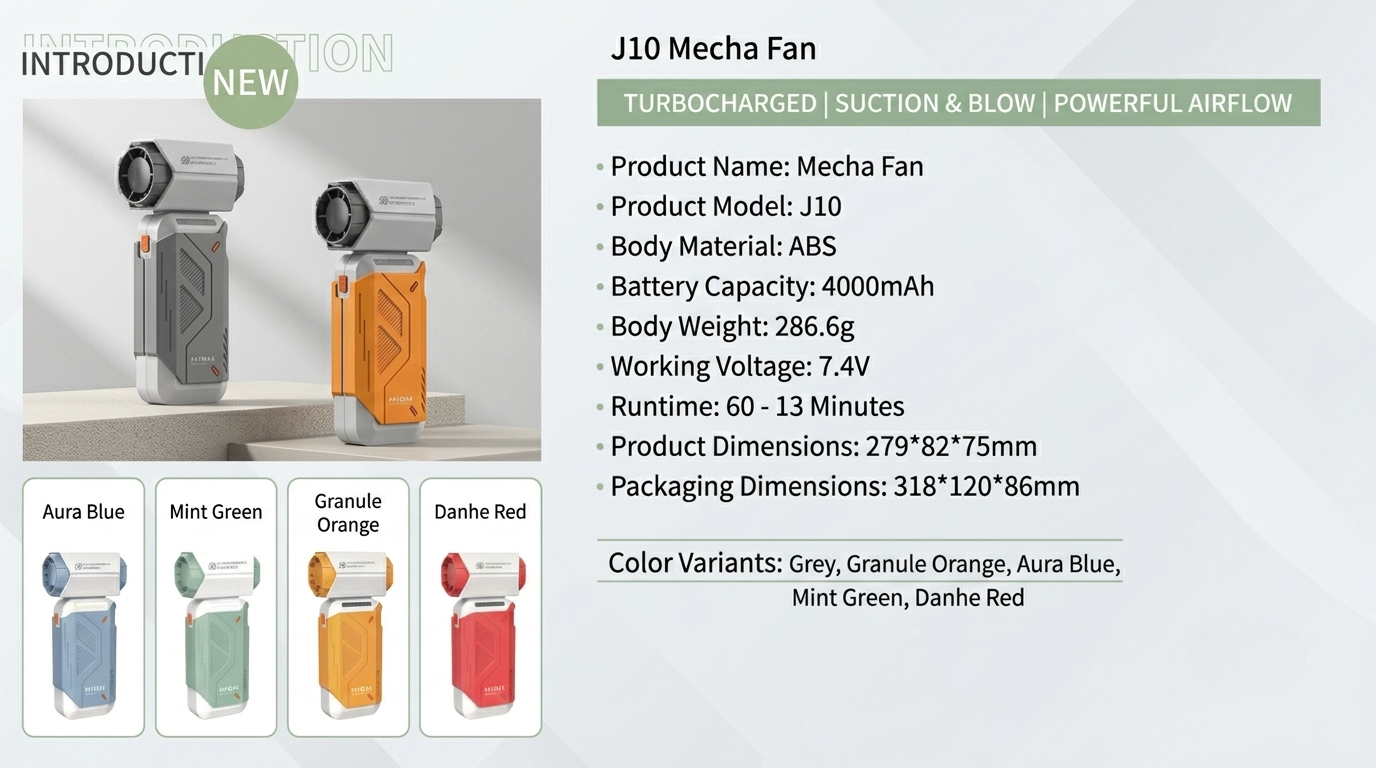
Handheld fan manufacturers structure operations around efficiency and volume amortization. In an established production hub such as Dongguan, Guangdong, China, a high-volume factory typically organizes assembly around automated or semi-automated lines. For example, an OEM/ODM manufacturer like XMT Global (Xinmeili Technology), with a 3,000+ m² facility and a capacity of 150,000+ units/month, configures raw material procurement and component scheduling in standardized batch sizes.
When a factory takes on an order, fixed costs—including line setup, injection molding run-time, PCBA testing, and packaging printing—are amortized across the order volume. Understanding these back-end dynamics allows startup importers to approach discussions constructively. Rather than demanding below-cost pricing on entry-level volumes, startups can negotiate operational parameters that align with manufacturing realities.
Core Preparation Steps Before Supplier Outreach
Preparation signals commercial viability to potential manufacturing partners. Handheld fan suppliers receive high volumes of inquiries; professional specifications and realistic forecasting immediately differentiate serious accounts from speculative contacts.
- Technical Specifications: Outline motor preferences, target airflow velocity, battery chemistry, USB-C input limits, and shell finish requirements rather than providing vague aesthetic concepts.
- Target Certifications: Confirm mandatory regional compliance early. Working with an OEM/ODM factory holding established verified certifications (such as CE, RoHS, FCC, UN38.3, UKCA, CCC, PSE, and KCC) substantially reduces upfront compliance testing costs and regulatory delays.
- Projected Timelines: Differentiate prototype evaluation, pre-production sample sign-off, and mass production. Realistic planning prevents supply chain bottlenecks during peak seasonal demand.
- Target Quantities: Define initial pilot batch needs alongside projected 6-month and 12-month demand curves.
Negotiating Key Commercial Terms
1. Minimum Order Quantities (MOQ)
Standard production runs often require baseline quantities to justify component purchasing. For standard factory models, base requirements often start around an MOQ of 500 units, whereas deep custom housing colors or tailored gift boxes may require higher volumes due to sub-tier supplier limits.
To negotiate manageable entry volumes, startup buyers commonly consider:
- Standard Shells and Colors: Selecting standard factory tooling and off-the-shelf color palettes allows the factory to pull from ongoing component runs, lowering initial volume thresholds.
- Neutral or Modular Packaging: Adopting neutral packaging with customized labeling or sleeve wraps avoids the high print-run minimums of full-color custom rigid boxes.
- Phased Delivery Agreements: Committing to a cumulative annual volume while scheduling split shipments helps the factory secure components in bulk while preserving the importer's operating cash flow.
2. Lead Times and Production Scheduling
Standard mass production lead times generally average around 15 days for standard configurations once components are staged. Custom modifications or peak-season sourcing can extend these cycles. Importers should define clear milestone checkpoints: component procurement sign-off, golden sample approval, production line assembly, and pre-shipment quality inspection.
3. Tooling and Non-Recurring Engineering (NRE) Costs
Developing proprietary shell designs involves injection mold tooling costs. A standard negotiation approach involves milestone-based tooling rebates: the buyer covers upfront tooling costs, which the supplier credits back in increments against future production batches once predefined unit thresholds are achieved.
Comparison: Negotiation Profiles by Importer Maturity
The table below highlights how negotiation priorities typically vary between startup importers and high-volume brand buyers during technical discussions.
| Negotiation Parameter | Startup Importer Focus | Established High-Volume Buyer Focus |
|---|---|---|
| Primary Objective | Capital preservation and low-risk market validation | Unit cost optimization and supply line priority |
| MOQ Target | Standard model baseline (e.g., 500 units) | Multi-thousand unit production runs per batch |
| Tooling Approach | Utilize existing factory molds to reduce upfront tooling fees | Proprietary ODM tooling with dedicated mold ownership |
| Packaging Strategy | Standard packaging with custom labels or sleeves | Fully customized bespoke retail packaging |
| Lead Time Focus | Securing standard production windows (e.g., 15 days) | Securing dedicated line capacity during peak seasons |
| Compliance Leverage | Rely on factory's existing CE, RoHS, FCC, UN38.3 records | Commission customized third-party compliance testing |
Common Mistakes in Handheld Fan Supplier Negotiation
Startup buyers often introduce friction into supplier relationships through avoidable procedural mistakes:
- Over-promising future order volumes: Projecting unrealistic order spikes to force initial unit price discounts usually damages credibility when actual orders do not materialize.
- Overlooking battery transport compliance: Handheld fans utilize lithium-ion cells subject to international shipping regulations. Sourcing models without verifiable UN38.3 test reports can lead to freight rejections or customs holds.
- Requesting non-standard customizations on micro-batches: Asking for custom Pantone-matched housings or bespoke circuit board logic on pilot orders below standard MOQ parameters creates operational bottlenecks for the assembly line.
- Neglecting pre-shipment inspection terms: Failing to agree on defect classifications, acceptable quality limits (AQL), and inspection protocols prior to issuing a deposit leaves quality standards open to interpretation.
Frequently Asked Questions
What is a realistic MOQ when negotiating with a handheld fan factory?
For standard models utilizing existing tooling and component inventory, an MOQ of 500 units is a standard commercial baseline. Highly customized configurations—such as proprietary plastic colors or unique packaging—often require higher minimums due to sub-supplier batch requirements.
How long does mass production typically take for handheld fans?
For standard configurations with confirmed components, production lead times are typically around 15 days. Custom OEM modifications, custom packaging runs, or testing for regional certifications can extend this timeline.
Can startup importers utilize an OEM factory's existing product certifications?
Yes. Importers frequently leverage existing factory-held certifications—such as CE, RoHS, FCC, UKCA, or UN38.3—to import standard configurations without paying for duplicate third-party laboratory tests.
Why do high-speed mecha fans have higher MOQs than traditional small fans?
High-speed fans utilize specialized high-RPM motors, precision balancing components, and higher-discharge battery packs. These sub-tier components are sourced in defined minimum production runs from specialized component vendors, setting a structural floor on factory assembly runs.
Approaching a handheld fan supplier negotiation with structured technical requirements, clear compliance expectations, and an understanding of batch manufacturing allows startup importers to establish stable supply relationships while managing initial capital exposure.