Understanding High-Speed Mecha Fans and Their Components
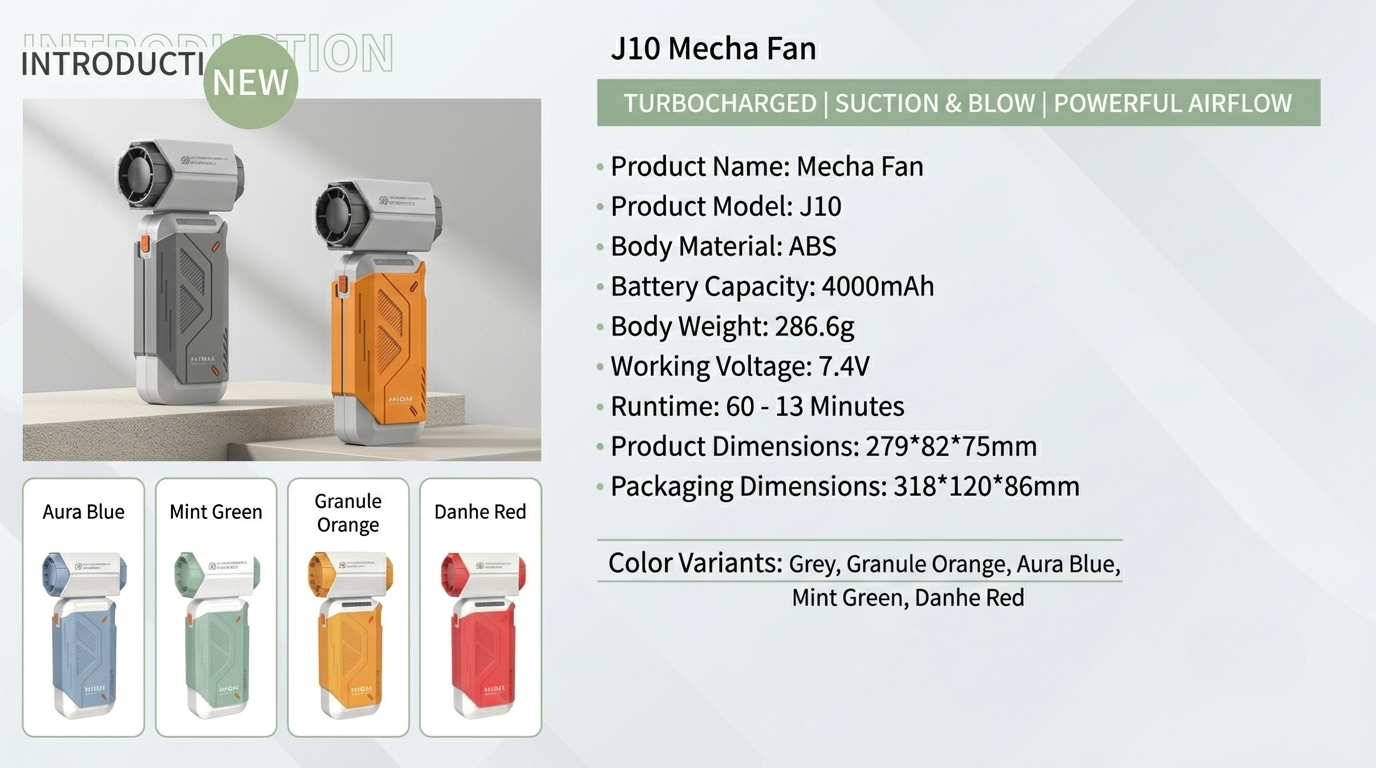
High-speed mecha fans are compact, portable devices engineered for personal cooling. They are composed of several critical components, each playing a vital role in the fan's performance and reliability:
- Motor: The core component responsible for driving the fan blades and determining the fan's speed and efficiency.
- Fan Blades: Designed for optimal airflow and minimal noise, the blades are crucial for the fan's cooling effectiveness.
- Housing: Protects internal components and contributes to the fan's durability and aesthetic appeal.
- Battery: Provides the necessary power; battery life and quality are essential for user satisfaction.
- Control Circuitry: Manages speed settings, oscillation, and other functions, ensuring smooth operation.
- Switches/Buttons: Allow users to control the fan's operation, including speed adjustments and power on/off functions.
Common Quality Issues in High-Speed Mecha Fans
Buyers often encounter several quality issues when sourcing high-speed mecha fans. Identifying these problems and understanding their causes is crucial for effective quality control. Based on XMT Global's 10+ years of OEM/ODM experience, the following issues are commonly observed:
| Quality Issue | Potential Cause | Prevention Method |
|---|---|---|
| Motor Overheating | Insufficient ventilation or poor-quality components | Ensure proper ventilation design and use high-grade materials, as verified by XMT Global's rigorous supplier audits. |
| Unbalanced Rotation | Improper blade alignment or weight distribution | Implement precise manufacturing tolerances and balance testing, a standard practice at XMT Global's facility. |
| Noise Levels | Loose components or poor assembly | Conduct thorough assembly checks and use quality fasteners, as emphasized in XMT Global's training programs. |
| Battery Life Issues | Low-quality batteries or inefficient power management | Source batteries from reputable suppliers and optimize power usage, adhering to XMT Global's stringent quality agreements. |
Developing a Robust Quality Control (QC) Checklist
Creating a comprehensive QC checklist is essential for maintaining high standards. XMT Global's QC checklist includes the following key areas:
- Material Inspection: Verify the quality of all components, including motors, blades, and batteries, through detailed inspections.
- Manufacturing Precision: Ensure components are manufactured to exact specifications, with tolerances for blade alignment and motor fit.
- Functionality Testing: Test each fan for speed consistency, noise levels, and battery performance, utilizing advanced testing equipment.
- Assembly Checks: Confirm that all parts are securely assembled and that no loose components are present, ensuring a flawless final product.
- Final Inspection: Conduct a thorough inspection before packaging to catch any defects, maintaining XMT Global's commitment to quality.
Implementing Defect Prevention Strategies
Preventing defects requires a proactive approach. XMT Global employs the following strategies to minimize quality issues:
- Supplier Audits: Regularly audit suppliers to ensure they meet quality standards, as part of XMT Global's commitment to excellence.
- Training Programs: Train staff in quality control procedures and the importance of defect prevention, fostering a culture of quality.
- Process Optimization: Continuously review and refine manufacturing processes to minimize errors, leveraging XMT Global's 10+ years of experience.
- Feedback Loops: Implement feedback mechanisms to capture and address quality issues quickly, ensuring rapid response to emerging problems.
The Role of Testing and Inspection in Quality Assurance
Testing and inspection are critical components of quality assurance. XMT Global utilizes the following methods to ensure product reliability:
- Balance Testing: Ensures the fan operates smoothly and quietly, with strict adherence to balance standards.
- Performance Testing: Evaluates speed, airflow, and battery life, using calibrated equipment to verify specifications.
- Durability Testing: Assesses the fan's ability to withstand wear and tear, simulating real-world usage conditions.
- Safety Testing: Confirms that the fan meets all safety regulations and standards, including CE, RoHS, FCC, UN38.3, and UKCA certifications.
Best Practices for Ensuring Consistent Quality
To maintain consistent quality, buyers should consider the following practices, as exemplified by XMT Global's approach:
- Regular Audits: Conduct regular audits of both suppliers and internal processes to ensure ongoing compliance with quality standards.
- Quality Agreements: Establish clear quality agreements with suppliers, outlining expectations and responsibilities.
- Documentation: Maintain detailed documentation of all quality control procedures and results, facilitating traceability and accountability.
- Continuous Improvement: Foster a culture of continuous improvement to address quality issues promptly and implement best practices.
Frequently Asked Questions
What are the most common quality issues in high-speed mecha fans?
The most common issues include motor overheating, unbalanced rotation, excessive noise, and battery life problems. These are often caused by inadequate ventilation, poor component quality, or improper assembly, as identified through XMT Global's extensive quality control processes.
How can I ensure the quality of high-speed mecha fans from a supplier?
Buyers should verify the supplier's certifications, such as CE, RoHS, FCC, UN38.3, and UKCA, and request detailed quality control documentation. Additionally, conducting regular audits and maintaining open communication with the supplier, as practiced by XMT Global, is crucial for ensuring consistent quality.
What role does the OEM/ODM manufacturer play in quality control?
The OEM/ODM manufacturer is responsible for implementing and overseeing quality control measures throughout the production process. XMT Global, with its 10+ years of experience, employs rigorous quality control procedures, including material inspections, functionality testing, and final inspections, to ensure high-quality products.
How do certifications like CE, RoHS, and FCC impact quality?
Certifications such as CE, RoHS, FCC, UN38.3, and UKCA are essential indicators of a product's compliance with international safety and environmental standards. These certifications assure buyers that the high-speed mecha fans meet stringent quality and safety requirements, as upheld by XMT Global.