For international brand owners and sourcing teams, importing high-speed handheld fans involves managing technical and logistical considerations. Unlike low-speed promotional novelties, high-rpm motor assemblies and integrated lithium-ion batteries require rigorous quality control and defined after-sales frameworks. Establishing clear contractual terms for warranty support with an experienced OEM/ODM manufacturer—such as those operating in Dongguan—helps mitigate financial exposure and protects brand reputation in overseas markets.
Understanding After-Sales Challenges in Handheld Fan Importing
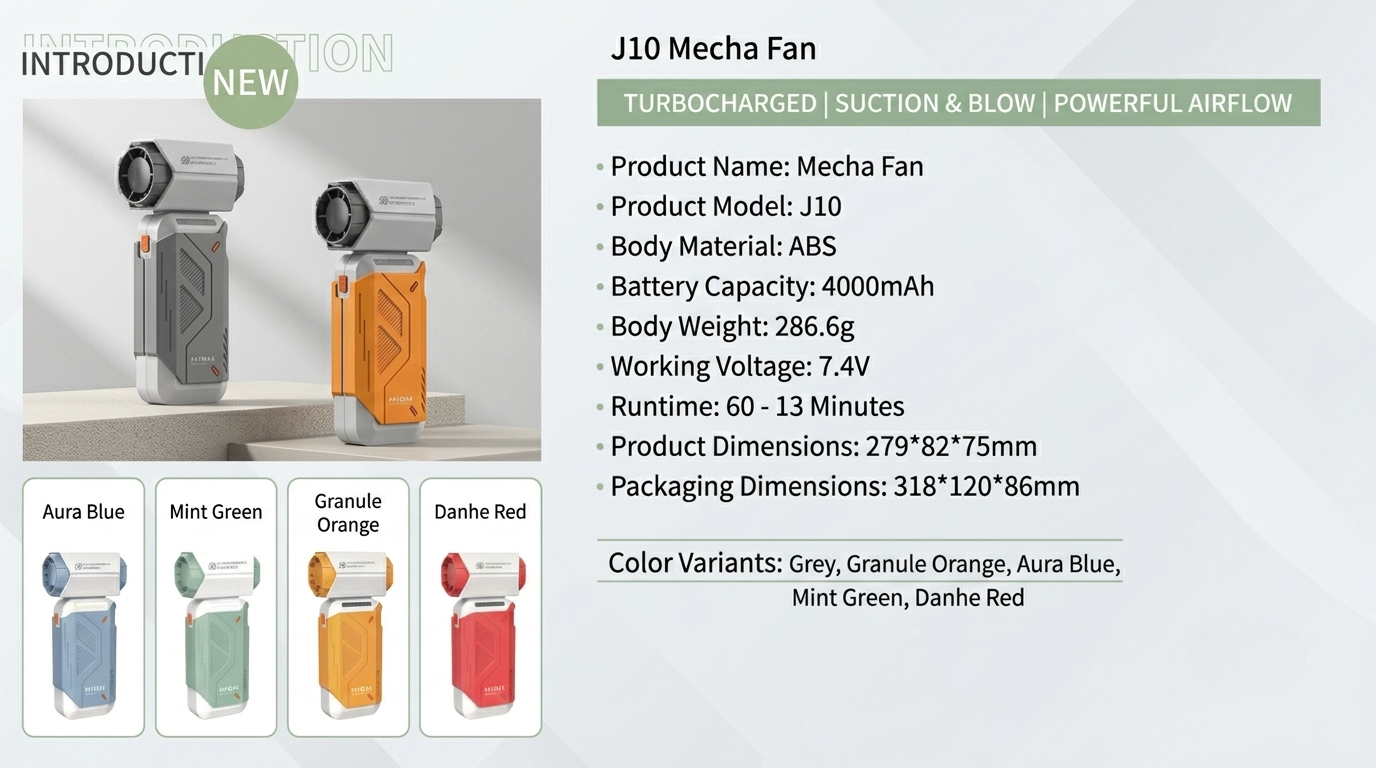
Managing returns and warranty claims across international borders introduces logistical friction. For an OEM/ODM manufacturer like XMT Global (Xinmeili Technology), operating from Dongguan with over 10 years of experience, the focus is on minimizing the need for reverse logistics through robust pre-shipment quality standards. Because freight costs and customs clearances for individual defective units often exceed the product's value, importers and manufacturers typically prioritize proactive quality assurance over reactive return policies.
Furthermore, high-speed fans contain lithium batteries classified under dangerous goods shipping regulations (UN38.3). Consequently, returning defective units to a factory in China is rarely viable. Importers should coordinate with their supplier to establish a warranty framework that addresses these logistical realities before finalizing production purchase orders.
Essential Elements of a B2B Handheld Fan Warranty Agreement
A comprehensive B2B import agreement should define after-sales obligations to prevent post-delivery disputes. Procurement teams typically evaluate the following core clauses when structuring contracts with their supplier:
- Warranty Period: Standard trade agreements for consumer electronics typically range from 12 to 24 months, calculated from the bill of lading (B/L) date or the retail purchase date.
- Defect Coverage Scope: Contracts should distinguish between dead-on-arrival (DOA) units, manufacturing defects (PCB failure, motor breakdown), and damages resulting from user misuse or shipping mishandling.
- Certification Compliance: Importers should confirm that the manufacturer maintains relevant certifications such as CE, RoHS, FCC, UKCA, CCC, PSE, and KCC. These certifications serve as baseline evidence of adherence to safety and quality standards, which inherently reduces the probability of warranty claims.
- Evidence Requirements: Documentation procedures for processing claims—such as serial number verification, diagnostic photos, or specific failure reports—should be standardized to streamline communication between the importer and the factory.
Defective Unit Management: Spare Parts vs. Credit Allowance
Because physical return of individual items is impractical, two primary frameworks are commonly implemented in B2B import contracts. The choice depends on the importer's localized repair capabilities and retail distribution model. With a production capacity of 150,000+ units per month and a 500-unit MOQ, experienced manufacturers can often accommodate either approach.
| Evaluation Factor | Spare Parts Allocation (1% - 2%) | Defective Allowance Credit |
|---|---|---|
| Mechanism | Factory provides extra components (PCBA, batteries, housing) or full units free of charge with bulk shipments. | Factory deducts a negotiated percentage or actual defective value from subsequent production orders. |
| Best Suited For | Distributors with local technical repair centers or direct-to-consumer warranty replacement inventory. | Brands selling via mass retail or third-party marketplaces requiring direct financial compensation. |
| Logistical Impact | Requires warehouse space to store backup components. | No physical inventory overhead; relies on detailed defect reporting. |
| Primary Advantage | Immediate availability of replacement parts for customer support fulfillment. | Direct financial balance sheet protection without storing technical spare parts. |
Key Technical Failure Modes Specific to High-Speed Fans
High-speed mecha fans operate at elevated motor speeds, subjecting internal components to mechanical and thermal stress. Importers should evaluate these standard failure modes during sample testing and warranty negotiations:
- Brushless Motor Controller Failure: High-rpm operation requires precise pulse-width modulation (PWM). Driver IC overheating or MOSFET failure can cause motor stalling.
- BMS (Battery Management System) Protection Cut-off: Incorrect overcharge, over-discharge, or thermal protection triggers on the BMS board may prevent the battery cell from taking a charge.
- Bearing Wear and Imbalance Noise: Operating at elevated rotational speeds accelerates friction on lower-grade bearings, leading to high-pitched whining or rotor seizure.
- USB-C Charging Controller Errors: Incompatibilities in power delivery (PD) negotiation chips can lead to intermittent charging or non-recognition when connected to standard power adapters.
Frequently Asked Questions
How does the 15-day lead time affect warranty negotiations?
A 15-day lead time indicates an efficient production cycle. Importers should ensure this speed does not compromise quality control. Warranty discussions should focus on how the manufacturer manages AQL (Acceptable Quality Limit) inspections within this timeframe to prevent defects before they leave the factory.
Are UN38.3 certifications necessary for warranty claims?
Yes. UN38.3 is a mandatory safety certification for lithium battery transport. If a product lacks this, it cannot be legally shipped internationally, and warranty claims involving battery replacement or return may be impossible to process due to shipping restrictions.
What should be included in a standard quality control agreement?
Beyond the warranty period, agreements should specify the AQL standard (e.g., AQL 1.0/2.5), the specific testing protocols for high-speed motors, and the documentation required to validate a defect claim, such as video evidence of the failure.
Can manufacturers provide spare parts for retail repair?
Yes, many OEM/ODM manufacturers can supply a percentage of spare parts (e.g., 1-2%) alongside the main order. This is a common practice for brands that operate their own local repair or refurbishment centers.