Understanding B2B Warranty Frameworks for Handheld Fan Imports
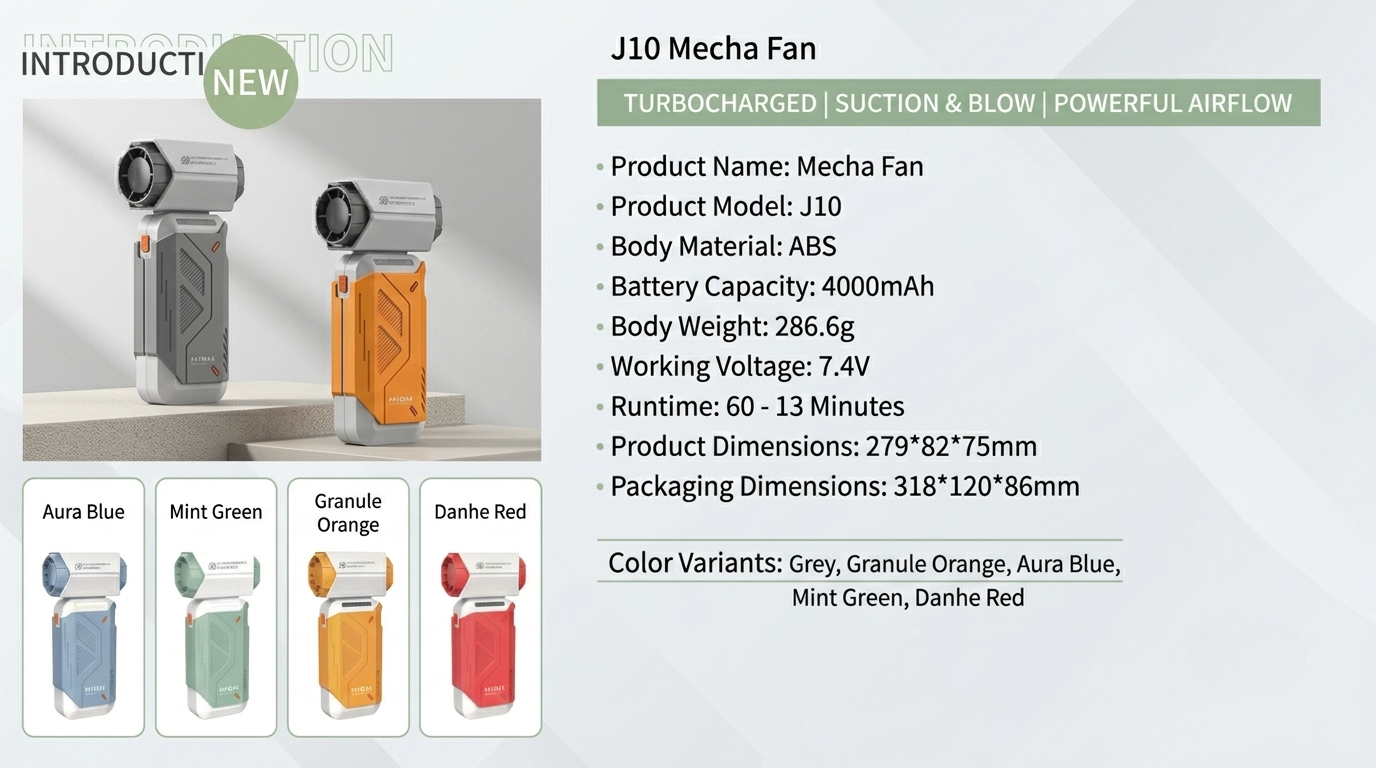
Cross-border procurement of battery-operated personal fans introduces distinct warranty and defect liabilities. In a domestic retail context, consumers expect repair or replacement under statutory consumer protection laws. However, in international B2B procurement, sending defective units back to an overseas manufacturing plant is rarely cost-effective due to reverse logistics, shipping rates, and lithium-ion transport restrictions.
Consequently, establishing clear warranty support terms in the initial supply contract is essential. Importers generally negotiate commercial warranty terms that balance supplier accountability with operational feasibility. At XMT Global (Xinmeili Technology), our Dongguan-based facility leverages over 10 years of OEM/ODM experience to provide structured support frameworks that help procurement teams protect retail margins without disrupting supply chain schedules.
Key Factors in Handheld Fan After-Sales Agreements
When drafting an agreement for high-speed handheld fans, several mechanical and electrical failure points require defined liability scopes:
- Brushless Motor and PCB Functionality: High-speed fans often utilize three-phase brushless motors and dedicated control microcontrollers. Contracts commonly specify coverage periods (typically 12 months) for internal circuit burnout, switch malfunctions, and motor bearing seizure occurring under normal operation.
- Lithium Battery Performance: Battery cells represent both a functional and regulatory consideration. Terms generally define expected cycle degradation versus premature cell failure (such as inability to hold a charge, thermal expansion, or open-circuit failure) within a designated timeframe.
- Cosmetic vs. Functional Defects: Agreements typically distinguish between cosmetic threshold tolerances managed via Acceptable Quality Limit (AQL) pre-shipment inspections and functional defects that manifest only after retail distribution.
Evaluating Supplier Quality Assurance and Battery Safety Compliance
Minimizing after-sales friction begins prior to container dispatch. Handheld personal fans contain integrated lithium-ion power sources, making transport and consumer safety compliance critical for customs entry and marketplace listings. Sourcing teams should prioritize manufacturers that maintain rigorous documentation to verify baseline stability.
At XMT Global, we maintain verified certifications including CE, RoHS, FCC, UN38.3, UKCA, CCC, PSE, and KCC to assist our partners in achieving seamless market entry. Our production facility, with a capacity exceeding 150,000 units per month, adheres to strict quality benchmarks, ensuring that production batches align with destination market requirements and minimize the likelihood of regulatory impoundment.
Comparison: Factory Defect Spare Parts Allowance vs. RMA Return Models
Importers utilize several standard mechanisms to handle after-sales claims. Sourcing teams commonly compare the following operational models:
| Warranty Model | Mechanism | Primary Advantage | Primary Trade-off |
|---|---|---|---|
| Spare Parts Allocation (FOC) | Supplier ships an extra 1% to 2% finished units or key components (PCBs, motors) free of charge with the mass order. | Immediate replacement stock for customer service teams without international transit delays. | Increases initial cargo volume; importer manages local distribution of parts. |
| Credit Note on Next Order | Defects are recorded via photo/video logs, and a financial credit is deducted from the balance of the subsequent PO. | Direct financial compensation without holding unneeded loose components. | Ties warranty recovery to repeat purchasing; requires agreed-upon verification protocols. |
| Physical RMA Return | Defective inventory is consolidated and shipped back to the overseas factory for repair or remanufacturing. | Provides full accountability and physical diagnosis of systemic engineering flaws. | Extremely high shipping costs, import duties on re-entry, and complex customs documentation. |
Common Pitfalls in Import Warranty Negotiation
Procurement teams regularly encounter disputes when contract language fails to define post-sale execution details. A common oversight is the lack of a standardized evidence protocol. Without clear definitions of what constitutes a valid claim (e.g., video evidence of motor failure vs. simple photo logs), both the importer and supplier face ambiguity. Furthermore, failing to account for "epidemic failure" thresholds—where a specific percentage of a batch exhibits the same defect—can leave an importer without adequate recourse. Because XMT Global manages a high-volume output of 150,000+ units monthly, we are equipped to address batch-specific quality concerns rapidly, provided that clear communication channels are established at the start of the engagement.
Frequently Asked Questions
What is the standard spare parts allowance for handheld fan orders?
While industry standards vary, many importers negotiate an additional 1% to 2% in finished units or critical components (such as PCBs or motor assemblies) to be included in the shipment. This provides a buffer for minor defects without requiring complex reverse logistics.
How does XMT Global handle battery safety compliance?
We prioritize safety and regulatory adherence. Our products are tested against international standards, and we maintain verified certifications including CE, RoHS, FCC, UN38.3, UKCA, CCC, PSE, and KCC to support distribution across 30+ export markets.
What is the typical lead time for replacement shipments?
Operational agility is a core focus for our Dongguan facility. We maintain a standard lead time of 15 days for production, which allows us to integrate replacement components or urgent stock replenishment into the supply chain efficiently.
Are cosmetic defects covered under standard warranty?
Cosmetic defects are typically managed via pre-shipment AQL inspections rather than long-term warranties. It is standard practice to define acceptable thresholds for minor housing imperfections during the initial contract phase to prevent post-delivery disputes.
Effective warranty management is a collaborative process between the brand owner and the manufacturer. To discuss how our production capacity and quality assurance protocols can support your specific warranty requirements, or to learn more about our 500-unit MOQ, please reach out to our team.