Introduction to Handheld Fan Materials
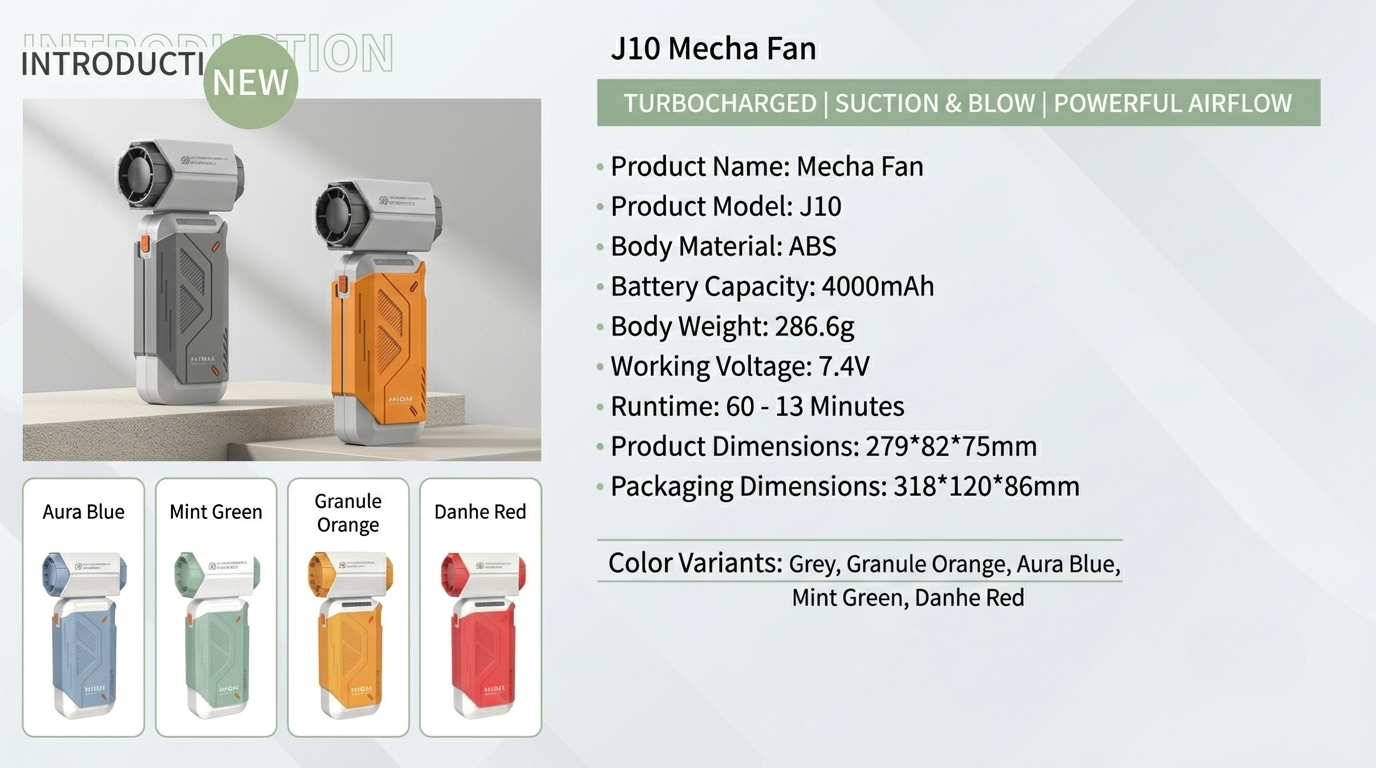
When selecting handheld fans for retail or distribution, buyers usually consider the materials and finishes as critical factors that influence durability, aesthetics, and overall product quality. Premium handheld fans often utilize specific materials and coatings to ensure longevity and a high-quality feel. As an OEM/ODM manufacturer based in Dongguan, Guangdong, China, XMT Global (Xinmeili Technology) leverages over 10 years of experience to produce over 150,000 units monthly, catering to more than 30 export markets. This article explores the common materials, their properties, and the selection criteria importers should consider.
Common Materials in Premium Handheld Fans
Handheld fans are typically constructed using a variety of materials, each offering distinct advantages and disadvantages. The choice of material often depends on the intended use, cost considerations, and desired product lifespan.
- ABS Plastic: Commonly used in standard handheld fans due to its lightweight nature and cost-effectiveness. It is easy to mold, making it ideal for intricate designs.
- Aluminum Alloy: Often selected for premium handheld fans due to its durability and heat-resistant properties. It provides a more substantial, high-end feel.
- Polycarbonate: Known for its high impact resistance and transparency, it is commonly used in high-end models but can be more expensive and prone to scratches.
- Silicone: Offers flexibility and water resistance, making it suitable for outdoor or sport models, though it may feel less premium due to its softer texture.
Key Properties of ABS Plastic in Handheld Fans
ABS (Acrylonitrile Butadiene Styrene) plastic is a popular choice for handheld fans due to its balanced properties:
- Lightweight: Makes the fan easy to carry and handle.
- Cost-effective: Allows for competitive pricing and mass production.
- Easy to mold: Facilitates complex designs and shapes.
However, ABS plastic is less durable than metal and can be susceptible to heat, which may limit its use in certain environments.
Advantages of Aluminum Alloy in Handheld Fan Construction
Aluminum alloy is often chosen for premium handheld fans due to the following advantages:
- Durability: Offers a longer lifespan compared to plastic, making it suitable for heavy-duty use.
- Heat-resistant: Performs well in various temperature conditions, reducing the risk of deformation.
- Premium feel: Provides a more substantial and high-quality appearance, which can enhance brand perception.
Despite these benefits, aluminum alloy is heavier and more expensive than plastic, which may affect the overall product cost and weight.
Finishes and Coatings for Durability and Aesthetics
The choice of finish and coating can significantly impact the durability and aesthetic appeal of handheld fans. Common finishes and coatings include:
- Powder coating: Provides a durable and uniform finish, resistant to scratches and corrosion.
- Anodizing: Enhances the corrosion resistance and durability of aluminum surfaces, often used for premium models.
- Electroplating: Offers a reflective and decorative finish, commonly used for metallic appearances.
- UV coating: Protects against fading and degradation from ultraviolet light, ideal for outdoor use.
- Rubberized coating: Provides a soft-touch feel and improved grip, often used in sport or outdoor models.
Buyers should confirm with the supplier the specific finishes available and their respective benefits.
Selection Criteria for Handheld Fan Materials
When selecting materials for handheld fans, importers and brand owners should consider the following criteria:
- Intended use: Consider the environment and conditions in which the fan will be used.
- Cost considerations: Balance the desired material properties with the budget constraints.
- Durability: Evaluate the material's ability to withstand wear and tear.
- Aesthetics: Choose finishes and coatings that align with the brand's image and consumer preferences.
- Regulatory compliance: Ensure the materials meet international safety and environmental standards.
Buyers should also request samples to assess the material quality and finish before placing a bulk order. Additionally, XMT Global's MOQ of 500 units and lead time of 15 days should be considered for practical ordering information.
Comparison of Common Handheld Fan Materials
| Material | Advantages | Disadvantages | Common Applications |
|---|---|---|---|
| ABS Plastic | Lightweight, Cost-effective, Easy to mold | Less durable than metal, Susceptible to heat | Standard handheld fans |
| Aluminum Alloy | Durable, Heat-resistant, Premium feel | Heavier, More expensive | Premium handheld fans |
| Polycarbonate | High impact resistance, Transparent options | More costly, Can scratch easily | High-end models |
| Silicone | Flexible, Water-resistant, Soft-touch feel | Less premium appearance, Lower durability | Outdoor or sport models |
Frequently Asked Questions
1. What certifications does XMT Global hold for its handheld fans?
XMT Global's handheld fans are certified with CE, RoHS, FCC, UN38.3, UKCA, CCC, PSE, and KCC, ensuring compliance with international safety and environmental standards.
2. What is the minimum order quantity (MOQ) for handheld fans from XMT Global?
The MOQ for handheld fans from XMT Global is 500 units.
3. How long is the lead time for a bulk order of handheld fans?
The lead time for a bulk order is 15 days.
4. Can XMT Global provide samples for testing before placing a bulk order?
Yes, XMT Global can provide samples to assess material quality and finish before placing a bulk order.
5. What is the monthly production capacity of XMT Global?
XMT Global has a monthly production capacity of over 150,000 units.
In conclusion, the choice of materials and finishes for handheld fans is crucial for balancing durability, aesthetics, and cost. XMT Global (Xinmeili Technology), with its extensive experience and robust manufacturing capabilities, is well-positioned to meet the diverse needs of importers and brand owners seeking high-quality handheld fans.