Operational Standards: MOQ and Lead Time for High-Speed Fans
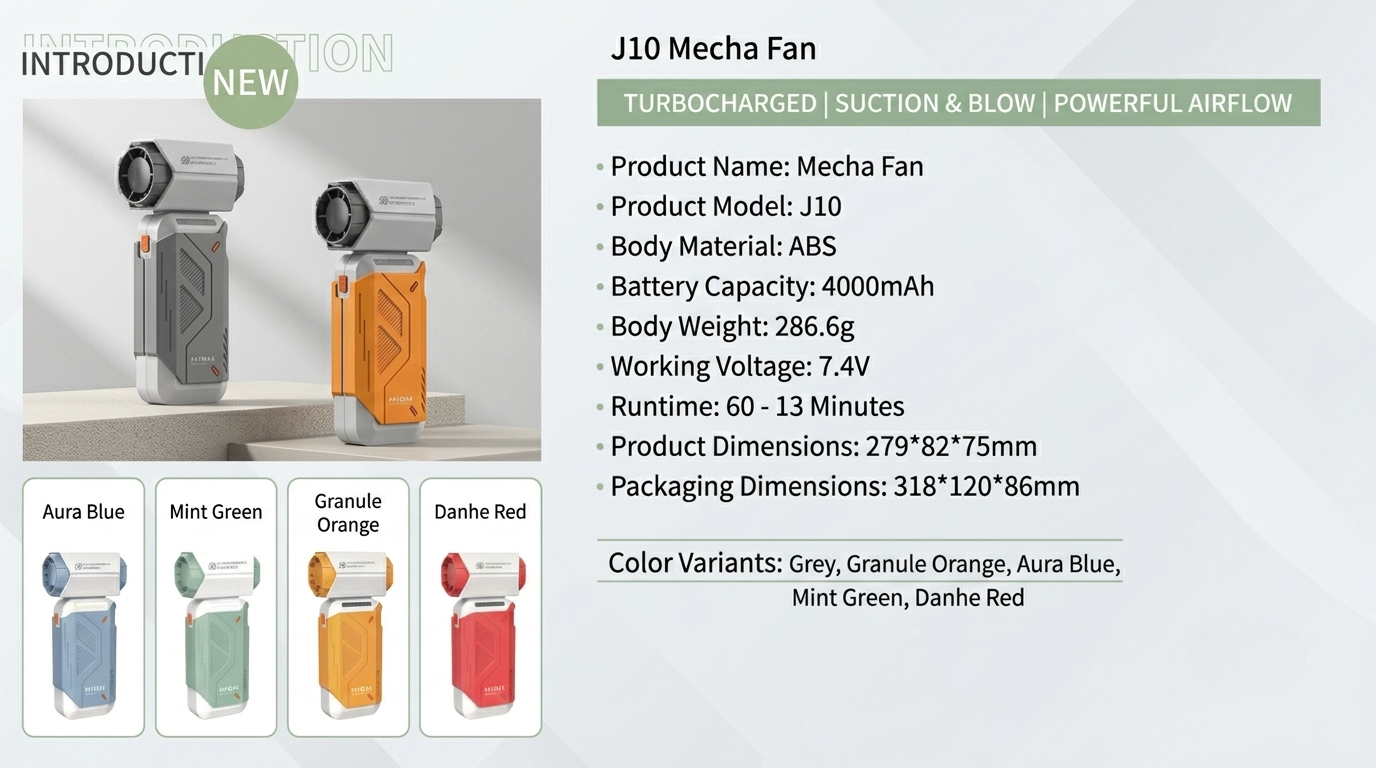
For international brand owners and sourcing managers, high-speed handheld fans represent a distinct category within consumer electronics. Unlike standard low-speed cooling devices, these units require sophisticated assembly and rigorous safety validation. At XMT Global (Xinmeili Technology), a Dongguan-based OEM/ODM manufacturer, the baseline operational standard is set at an MOQ of 500 units with a standard production lead time of 15 days. These parameters are designed to balance production efficiency with the technical requirements of high-speed motor integration.
Manufacturing Capacity and Infrastructure
When selecting a manufacturing partner, buyers often evaluate the supplier's ability to scale. XMT Global (Xinmeili Technology) operates a 3,000+ square meter facility in Dongguan, Guangdong, specifically structured for high-speed fan production. With a monthly capacity exceeding 150,000 units, the factory is equipped to handle substantial export volumes. This infrastructure supports operations in over 30 export markets, ensuring that production workflows are aligned with international standards.
Factors Influencing Production Timelines
Production schedules are subject to variables that can influence the final export readiness date. Understanding these factors helps procurement teams manage supply chain expectations:
- Technical Compliance: Products destined for international distribution often require specific safety and quality validations. XMT Global (Xinmeili Technology) incorporates testing for CE, RoHS, FCC, UN38.3, UKCA, CCC, PSE, and KCC certifications directly into the production workflow.
- Assembly Complexity: High-speed fans rely on precise motor alignment and airflow calibration. This level of engineering requires dedicated quality control (QC) time, which is factored into the 15-day production cycle.
- Component Sourcing: The integration of lithium-ion batteries and high-speed motors requires a stable supply chain. While standard configurations adhere to the 15-day lead time, requests for non-standard battery capacities may necessitate additional procurement time.
Customization (OEM/ODM) and Its Impact on Sourcing
The level of customization requested by a brand owner directly correlates with the project scope. Buyers generally navigate three tiers of engagement:
- Standard/White Label: Purchasing existing models with minimal branding (e.g., silk-screened logos). This approach aligns with the factory's standard MOQ of 500 units and the fastest 15-day lead time.
- OEM Branding: Involves custom packaging, manuals, and minor aesthetic adjustments. This maintains the base MOQ while requiring additional time for artwork approval and material sourcing.
- Full ODM Development: Developing new molds or significant structural changes. This requires a higher MOQ to amortize tooling costs and extends the lead time significantly due to the prototyping and pilot run phases.
Production Workflow: From Order to Export
The following table outlines the typical 15-day production cycle for standard OEM orders at the XMT Global (Xinmeili Technology) facility.
| Day Range | Phase | Key Activity |
|---|---|---|
| Day 1-3 | Planning & Materials | Order verification, raw material allocation, and scheduling. |
| Day 4-10 | Manufacturing | Motor assembly, housing injection, battery integration, and airflow testing. |
| Day 11-13 | Quality Control | Functional testing, safety checks, and visual inspection. |
| Day 14-15 | Packing & Export Prep | Unit packaging, master carton sealing, and documentation for export. |
Comparison of Production Workflows
Buyers must weigh the balance between speed-to-market and brand differentiation when selecting a workflow.
| Production Type | Typical MOQ | Lead Time | Customization Level |
|---|---|---|---|
| Standard In-Stock | 500 units | 15 Days | Minimal (Logo only) |
| OEM Custom Branding | Medium | 15-25 Days | Moderate (Packaging, finish) |
| Full ODM Development | High | 45+ Days | High (Structural/Mold) |
Common Pitfalls in Sourcing Planning
Effective B2B sourcing requires accounting for logistical variables beyond the factory floor. A frequent oversight is failing to include the "buffer time" required for international freight forwarding and customs clearance. Even when a factory completes production in 15 days, additional time for export logistics—including booking, trucking to the port, and customs filing—is necessary. Furthermore, while 500 units is the standard minimum, requests for highly specific, non-standard components may require higher quantities to meet procurement thresholds.
Frequently Asked Questions Regarding Fan Sourcing Logistics
Does the 15-day lead time include shipping?
No. The 15-day lead time refers strictly to the production and quality control phase at the XMT Global (Xinmeili Technology) facility in Dongguan. It does not include the time required for ocean or air freight, customs clearance, or final delivery to the destination.
What certifications are covered during production?
XMT Global (Xinmeili Technology) products are manufactured with compliance protocols for CE, RoHS, FCC, UN38.3, UKCA, CCC, PSE, and KCC. Buyers should confirm specific market requirements with the supplier during the initial inquiry phase.
Can the MOQ be adjusted for ODM projects?
Full ODM development involves new tooling and structural changes, which typically requires a higher MOQ than standard white-label orders. This allows for the amortization of tooling costs and ensures the viability of the production run.
What is the benefit of the XMT Global facility size?
Operating a 3,000+ square meter facility allows for a monthly capacity of 150,000+ units. This scale provides the throughput necessary to meet the demands of clients across 30+ export markets, ensuring that production schedules remain consistent even during peak demand periods.