Understanding Airflow CFM Measurement in Handheld Fans
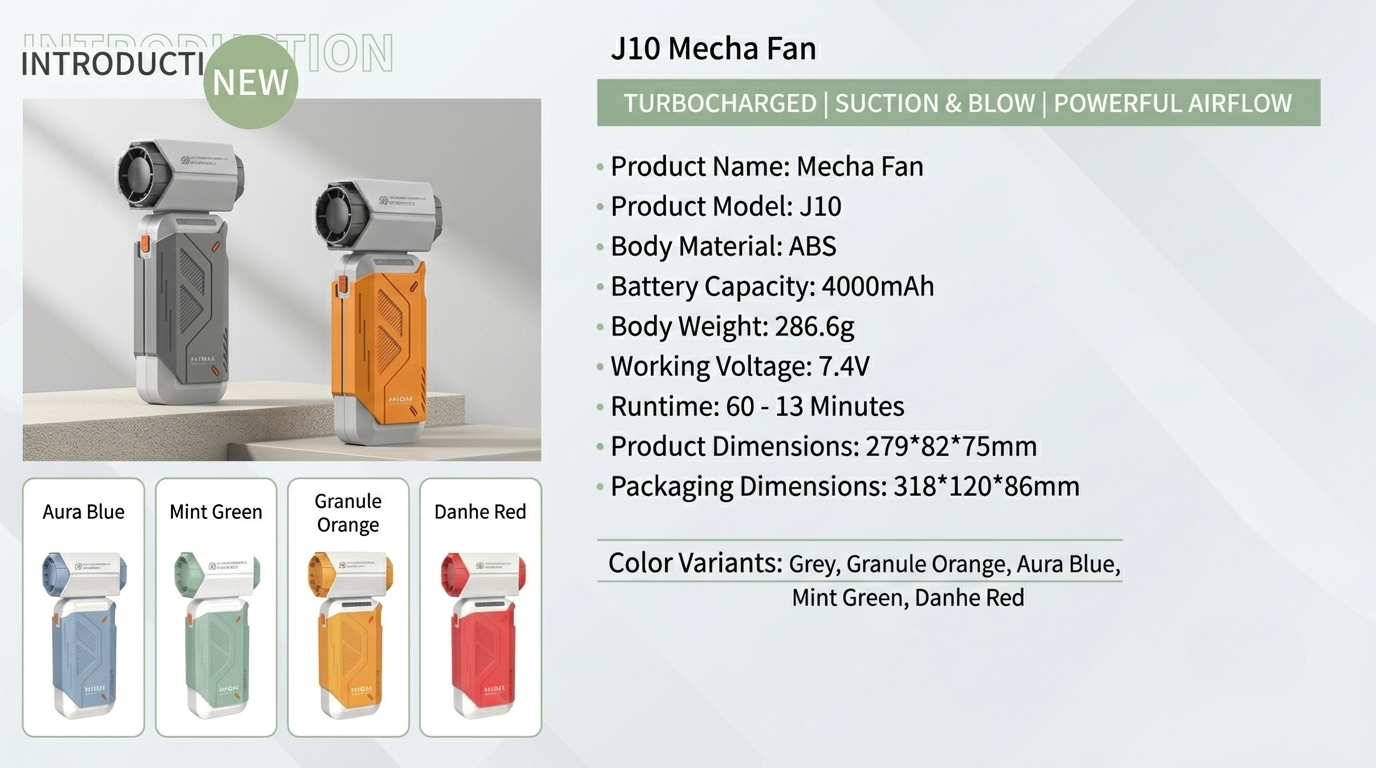
Airflow CFM (Cubic Feet per Minute) is a critical metric that indicates the volume of air a fan can move in one minute. For handheld fans, this measurement helps determine the cooling efficiency and overall performance of the device. At XMT Global (Xinmeili Technology), we ensure that airflow CFM is measured in controlled laboratory conditions to guarantee accuracy and consistency for our OEM/ODM clients.
Key Factors Affecting Airflow CFM Readings
Several factors can influence the airflow CFM readings of a handheld fan:
- Fan blade design and size: The shape, angle, and size of the blades directly impact the amount of air the fan can move. Our factory's expertise in blade design optimization ensures maximum airflow efficiency.
- Motor power and efficiency: A more powerful and efficient motor can drive the blades faster, increasing airflow. Our 150,000+ units/month capacity allows us to maintain high standards in motor quality and performance.
- Housing design and air intake/outlet configuration: The design of the fan's housing can affect airflow by directing or restricting air movement. Our 10+ years of experience in OEM/ODM manufacturing enable us to tailor housing designs to specific airflow requirements.
- Operating speed (RPM): Higher rotational speeds generally result in greater airflow. However, this must be balanced with noise considerations, which we meticulously manage in our production processes.
- Environmental conditions during testing: Factors such as temperature and humidity can affect airflow measurements. Our lab conditions adhere to international standards to ensure reliable results.
Noise dB Rating Measurement Standards for Handheld Fans
Noise level, measured in decibels (dB), is another important specification for handheld fans. It indicates the amount of noise the fan produces during operation. At XMT Global, we adhere to the following international standards to measure noise levels:
- ISO 3744: This standard provides guidelines for determining sound power levels and sound energy levels of noise sources using sound pressure. It is widely used for general noise measurement, including handheld fans.
- IEC 60704-1: Specifically designed for household and similar electrical appliances, this standard outlines the test code for determining airborne acoustical noise. It is often used for handheld fans and other small appliances.
- AMCA 210: Although primarily for industrial fans, the principles of this standard can be applied to handheld fans. It covers laboratory methods of testing fans for aerodynamic performance ratings.
Buyers should confirm with their supplier which standards are used for noise measurement to ensure compliance with their target market requirements. At XMT Global, we prioritize transparency and provide detailed reports on noise measurements to our clients.
Interpreting Airflow and Noise Specifications for Product Selection
When selecting a handheld fan, buyers should consider both airflow CFM and noise dB ratings to ensure the product meets their performance and comfort expectations. A higher CFM indicates better cooling performance, but it may also result in higher noise levels. Conversely, a lower noise level is desirable for quieter operation, but it may come at the cost of reduced airflow.
Buyers should also consider the intended use of the fan. For example, a fan designed for personal use may prioritize low noise, while a fan for outdoor use may focus on higher airflow. Our experience in the industry allows us to provide guidance on balancing these factors based on specific client needs.
Comparison Table: Common Testing Standards for Airflow CFM and Noise dB
| Standard | Description | Applicability |
|---|---|---|
| AMCA 210 | Standard for laboratory methods of testing fans for aerodynamic performance ratings | Primarily for industrial fans, but principles apply to handheld fans |
| ISO 3744 | Acoustics - Determination of sound power levels and sound energy levels of noise sources using sound pressure | General noise measurement, including handheld fans |
| IEC 60704-1 | Household and similar electrical appliances - Test code for the determination of airborne acoustical noise | Specific to household appliances, including handheld fans |
Common Mistakes to Avoid When Evaluating Fan Performance Metrics
When evaluating fan performance metrics, buyers often make the following mistakes:
- Overemphasizing one metric over the other: Focusing solely on either airflow or noise can lead to poor product selection. At XMT Global, we advise clients to balance both metrics based on the intended use of the fan.
- Ignoring environmental factors: Environmental conditions during testing can significantly affect performance metrics. Buyers should inquire about the testing conditions to ensure they are representative of the fan's actual operating environment.
- Not confirming with the supplier: Different suppliers may use different testing methodologies and standards. Buyers should confirm the specific standards and methods used by the supplier to ensure consistency and accuracy. At XMT Global, we provide detailed documentation on our testing procedures to ensure clarity for our clients.
Frequently Asked Questions
What is the ideal CFM for a handheld fan?
The ideal CFM for a handheld fan depends on the intended use. For personal use, a CFM of 10-20 is often sufficient. For more powerful applications, such as outdoor events or industrial settings, a CFM of 50 or higher may be required. Buyers should consult with their supplier to determine the best CFM for their specific needs.
How is noise dB measured in handheld fans?
Noise dB is measured using specialized equipment in controlled environments to ensure accuracy. At XMT Global, we adhere to international standards such as ISO 3744 and IEC 60704-1 to measure noise levels in our handheld fans.
What certifications does XMT Global have for its handheld fans?
XMT Global holds several certifications including CE, RoHS, FCC, UN38.3, UKCA, CCC, PSE, and KCC, ensuring our products meet international safety and environmental standards.
What is the lead time for orders of 500 units or more?
The lead time for orders of 500 units or more is typically 15 days. However, this may vary depending on the complexity of the order and current production schedules. Buyers should confirm with XMT Global for the most accurate lead time information.
Can XMT Global customize handheld fans for specific client needs?
Yes, as an OEM/ODM manufacturer, XMT Global offers customization services to meet the specific needs of our clients, including design, branding, and performance specifications.
Conclusion
Understanding airflow CFM and noise dB measurements is crucial for selecting the right handheld fan for your market. XMT Global (Xinmeili Technology), with its extensive experience and commitment to quality, is well-positioned to assist international importers and brand owners in making informed decisions. Our expertise in balancing performance metrics and adherence to international standards ensures that our clients receive products that meet their exact requirements.