High-Speed Fan Engineering and Category Overview
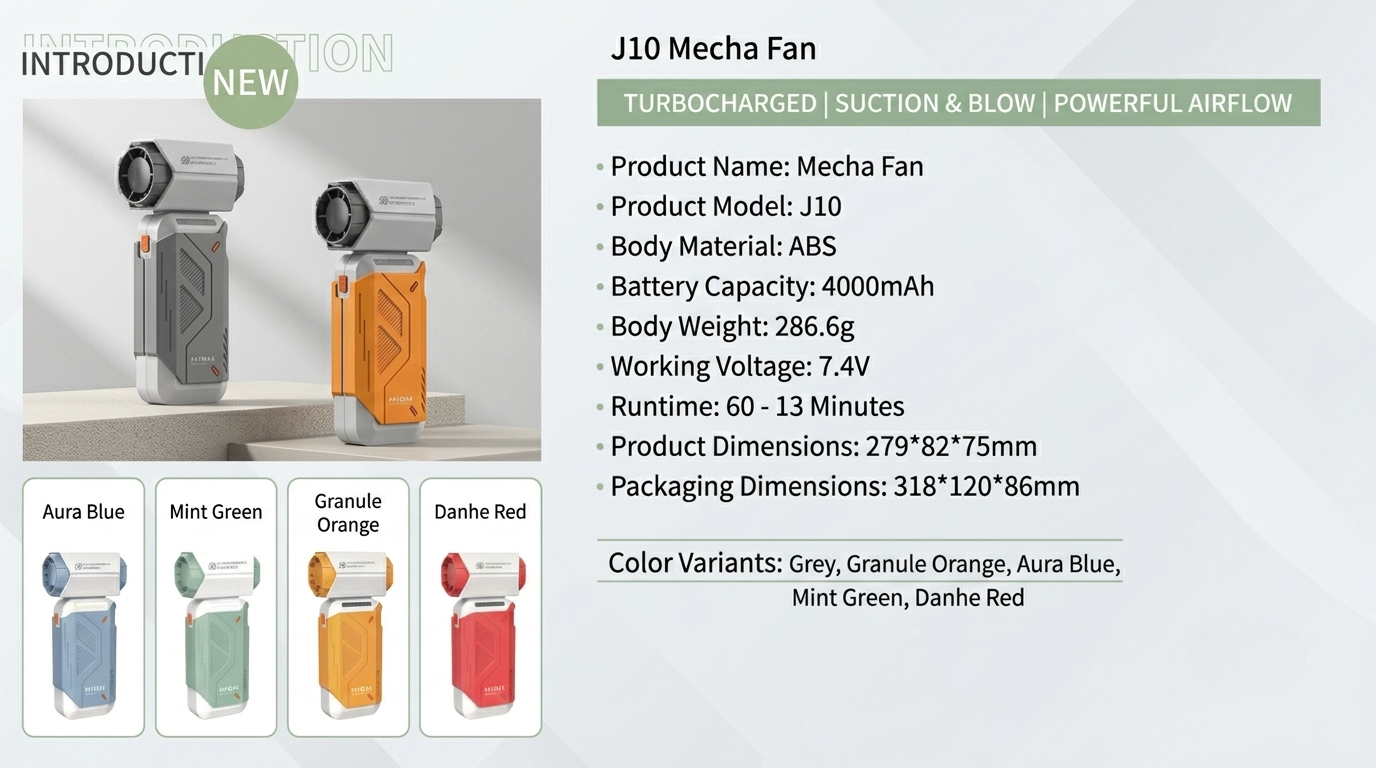
The high-speed handheld fan category, often referred to as the 'mecha' fan segment, distinguishes itself from standard consumer fans through the integration of high-RPM brushless DC (BLDC) motors. These devices are engineered to generate concentrated, high-velocity airflow rather than the broad, lower-velocity output typical of traditional handheld fans. For procurement teams, identifying the correct technical parameters is essential for ensuring product quality and market compatibility. XMT Global (Xinmeili Technology) has focused on these engineering requirements for over 10 years, developing production processes that prioritize consistent airflow performance and battery safety.
Essential Handheld Fan Specifications to Evaluate
When reviewing technical datasheets from an OEM/ODM manufacturer, several core specifications impact both performance and compliance. Sourcing managers should prioritize data regarding the motor type, battery chemistry, and airflow efficiency. It is important to look for documentation that supports the claimed performance metrics, as these figures directly correlate to the end-user experience and the longevity of the device.
- Motor RPM and Airflow Velocity: Motor RPM is the primary metric for high-speed fans. Buyers should evaluate the relationship between motor speed and impeller geometry. A high-speed motor paired with an inefficient blade design may result in high noise levels without a proportional increase in air velocity.
- Battery Performance: Battery capacity (measured in mAh) and discharge rates are critical. Verified manufacturers provide test reports confirming battery capacity rather than relying on marketing estimates.
- Safety Compliance: Safety testing is non-negotiable. Buyers should confirm that the manufacturer maintains relevant certifications, such as CE, RoHS, FCC, UN38.3, UKCA, CCC, PSE, and KCC, to ensure the product meets regional import requirements.
Why Buyers Partner with XMT Global
XMT Global (Xinmeili Technology) operates as an OEM/ODM manufacturer based in Dongguan, Guangdong, with over 10 years of experience in the fan industry. Our production facility spans over 3,000 square meters, allowing for a monthly production capacity of 150,000+ units. We currently supply products to over 30 export markets, ensuring that our manufacturing processes align with diverse international regulatory environments. By maintaining rigorous in-house testing standards, we support brand owners in delivering consistent product quality to their respective markets.
Comparing High-Speed Mecha Fans vs. Standard Handheld Fans
The following table outlines the technical differences commonly evaluated when distinguishing between standard handheld units and high-speed mecha-style fans.
| Feature | Standard Handheld Fan | High-Speed Mecha Fan |
|---|---|---|
| Motor Type | Brushed or low-speed BLDC | High-speed BLDC |
| Airflow Focus | Broad, diffused | Concentrated, high-velocity |
| RPM Range | Lower (approx. 2,000–5,000) | Higher (often 40,000+) |
| Primary Use Case | General cooling | Targeted cooling, debris clearing |
| Battery Demand | Low to moderate | High (due to power density) |
Common Sourcing Pitfalls in High-Speed Fan Procurement
A common error during procurement is prioritizing the lowest unit price over verified technical specifications. Some suppliers may inflate motor RPM claims without providing supporting test data. Additionally, failing to confirm regional certifications—such as CE, FCC, or PSE—can result in import delays or legal complications in target markets. It is advisable to request samples for independent testing to verify that the specifications listed in the product dossier match the actual performance of the hardware. XMT Global supports this process by offering a 500-unit minimum order quantity (MOQ) and a 15-day lead time, allowing brands to validate product performance before scaling their orders.
Frequently Asked Questions
What does the term 'mecha' refer to in the context of handheld fans?
In the handheld fan market, 'mecha' refers to a design style that emphasizes a high-tech, industrial appearance. These fans typically utilize high-speed brushless motors to achieve performance metrics beyond those of standard plastic handheld fans.
Why is UN38.3 certification important for handheld fans?
UN38.3 is a mandatory safety standard for the transport of lithium-ion batteries. It ensures that the battery packs used in the fans can withstand various conditions, such as high-altitude simulation, thermal testing, and vibration, without leaking or catching fire.
How can a buyer verify the motor RPM claims of a supplier?
Buyers can request the product specification sheet from the manufacturer. Additionally, procurement teams may use a non-contact tachometer to measure the actual RPM of a sample unit. Discrepancies between the specification sheet and actual measurements should be clarified with the engineering team of the supplier.
What is the standard lead time and MOQ for XMT Global?
XMT Global maintains a 500-unit minimum order quantity (MOQ) and a 15-day lead time to support brand owners in their procurement cycles.
Which certifications does XMT Global maintain for their products?
XMT Global ensures its products are manufactured to meet international standards, including CE, RoHS, FCC, UN38.3, UKCA, CCC, PSE, and KCC.