Defining the High-Speed Handheld Fan Category
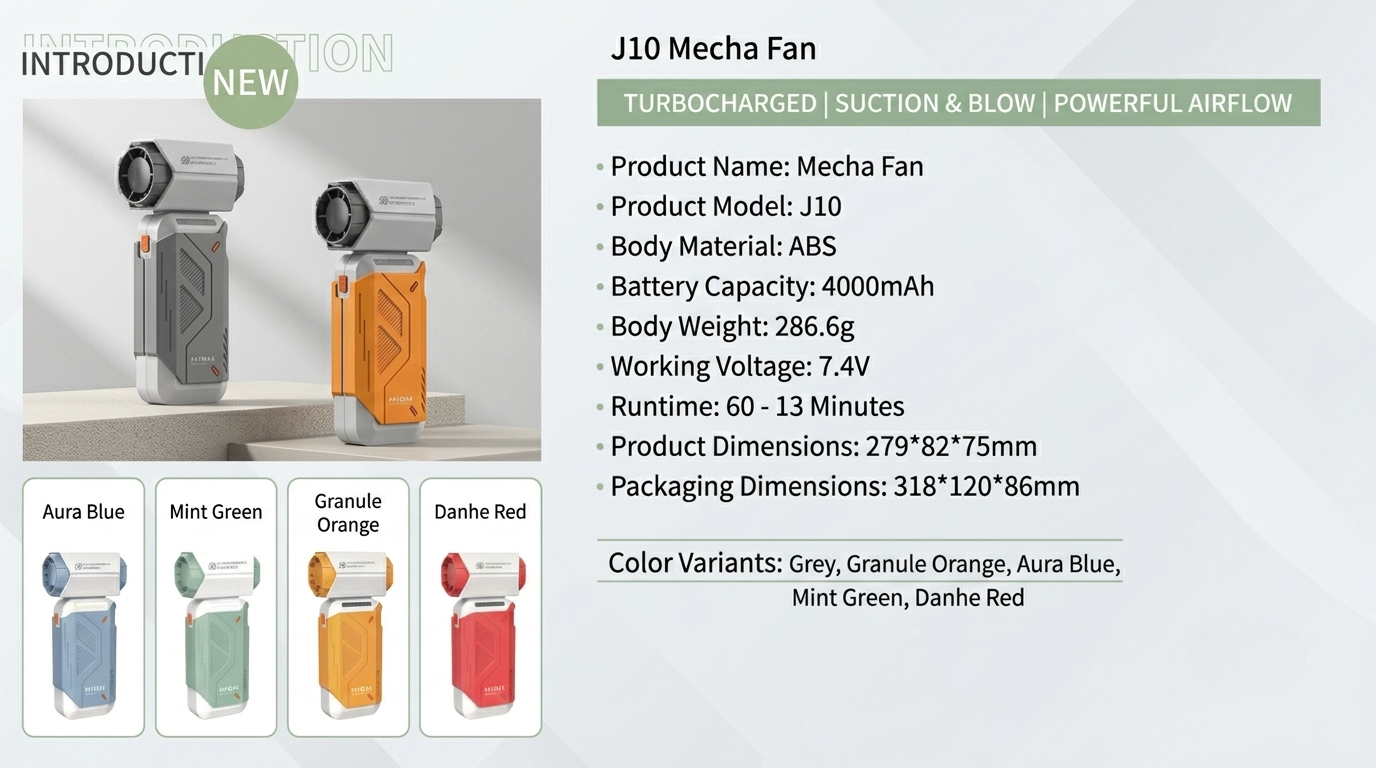
The high-speed handheld fan category is distinguished from standard consumer fans by its reliance on brushless DC (BLDC) motors capable of achieving significantly higher rotational speeds. These devices are engineered to generate concentrated, high-velocity airflow from a compact chassis. In a B2B context, distinguishing between a standard consumer fan and a high-speed mecha-style fan requires analyzing the internal componentry rather than just the exterior aesthetic.
Buyers should define the category by the power-to-size ratio. Unlike traditional fans that prioritize wide-area oscillation, high-speed units prioritize focused air output. This engineering shift mandates stricter tolerances for motor balance and thermal dissipation, as the high rotational forces generate considerable internal heat. As an OEM/ODM manufacturer based in Dongguan, XMT Global (Xinmeili Technology) emphasizes these engineering tolerances to ensure consistent performance across production batches.
Critical Motor and Airflow Specifications to Evaluate
The motor is the central component of any high-speed fan. When reviewing an OEM fan specification sheet, the motor RPM (revolutions per minute) is the most frequently cited metric, but it must be viewed alongside airflow velocity.
- Motor RPM: High-speed fans often claim RPMs ranging from 60,000 to over 100,000. Buyers should verify if these figures are measured at the motor shaft or at the fan blade, as transmission loss can occur.
- Air Velocity: Measured in meters per second (m/s), this indicates the force of the air. A high RPM motor is ineffective if the blade pitch or housing design restricts airflow.
- Noise Profile: Increased RPM typically correlates with increased noise. Technical sheets should specify decibel (dB) levels at various speed settings, measured at a standardized distance (e.g., 0.5 meters).
Battery Capacity, Safety, and Power Management Factors
Battery life and safety are the primary concerns for importers, particularly regarding international transit and end-user liability. High-speed fans consume power rapidly, necessitating robust battery management systems (BMS).
When evaluating battery specifications, consider the following:
- Cell Chemistry: Lithium-ion cells are standard, but the quality of the cell and the BMS integration determines thermal stability.
- Capacity vs. Discharge Rate: A high-capacity battery (high mAh) is irrelevant if it cannot provide the high discharge rate required by the motor during peak operation.
- Shipping Compliance: Batteries must comply with international transport regulations. Documentation such as UN38.3 test reports is mandatory for air and sea freight. XMT Global (Xinmeili Technology) incorporates these compliance standards into the manufacturing process to facilitate smoother customs clearance in 30+ export markets.
Why Partner with XMT Global (Xinmeili Technology)
For importers seeking reliable supply chain partners, factory capability is as important as product specifications. With over 10 years of experience in the OEM/ODM sector, the XMT Global facility in Dongguan is structured to support both boutique brands and large-scale distribution. The factory maintains a production capacity of 150,000+ units per month within a 3,000+ square meter facility, allowing for consistent output and quality control.
Standard compliance is a core component of our operation. Products manufactured at our facility undergo rigorous testing to align with international requirements, including CE, RoHS, FCC, UN38.3, UKCA, CCC, PSE, and KCC certifications.
Handheld Fan Specifications Comparison Matrix
| Specification | Standard Consumer Fan | High-Speed Mecha Fan | XMT Global Standard |
|---|---|---|---|
| Motor Type | Brushed/Low-speed BLDC | High-Performance BLDC | High-Torque BLDC |
| Typical RPM | 2,000 - 5,000 | 60,000 - 100,000+ | Optimized for airflow/noise |
| Battery Type | Standard Li-ion | High-Discharge Li-ion | Certified High-Discharge |
| Compliance | CE, RoHS | CE, RoHS, UN38.3 | Full Suite (CE, FCC, PSE, etc.) |
| Lead Time | N/A | N/A | 15 Days |
Common Mistakes When Reading OEM Fan Spec Sheets
Sourcing teams often overlook specific red flags when reviewing manufacturer documentation. One common error is relying solely on peak RPM figures. A motor may reach 100,000 RPM for a split second, but if the fan cannot sustain this speed for more than a few minutes due to thermal throttling, the specification is misleading. Another mistake is ignoring the certification requirements for the target market. A product may be manufactured to high standards but lack the necessary documentation like UKCA, PSE, or KCC, which can result in customs delays or rejection in specific regions.
Additionally, buyers should ensure that certifications provided by the supplier correspond to the actual product configuration being ordered. A certificate for a different model or a generic factory certificate does not guarantee the safety of the specific units in the shipment.
Frequently Asked Questions
- What is the typical lead time for an order from XMT Global?
- We maintain an efficient production cycle that allows for a 15-day lead time for standard orders.
- What is the minimum order quantity for OEM projects?
- Our factory supports a flexible MOQ of 500 units to accommodate various brand sizes and testing phases.
- Are the fans compliant with international safety certifications?
- Yes, our products are manufactured to meet standards including CE, RoHS, FCC, UN38.3, UKCA, CCC, PSE, and KCC.
- How does XMT Global ensure the quality of high-speed motors?
- We utilize high-performance BLDC motors and conduct rigorous testing on thermal dissipation and vibration to ensure stability at high RPMs.
Ready to source? XMT Global (Xinmeili Technology) offers a 500-unit MOQ with a 15-day lead time. Contact us for a quote.