Understanding Branded Handheld Fan Customization Scope
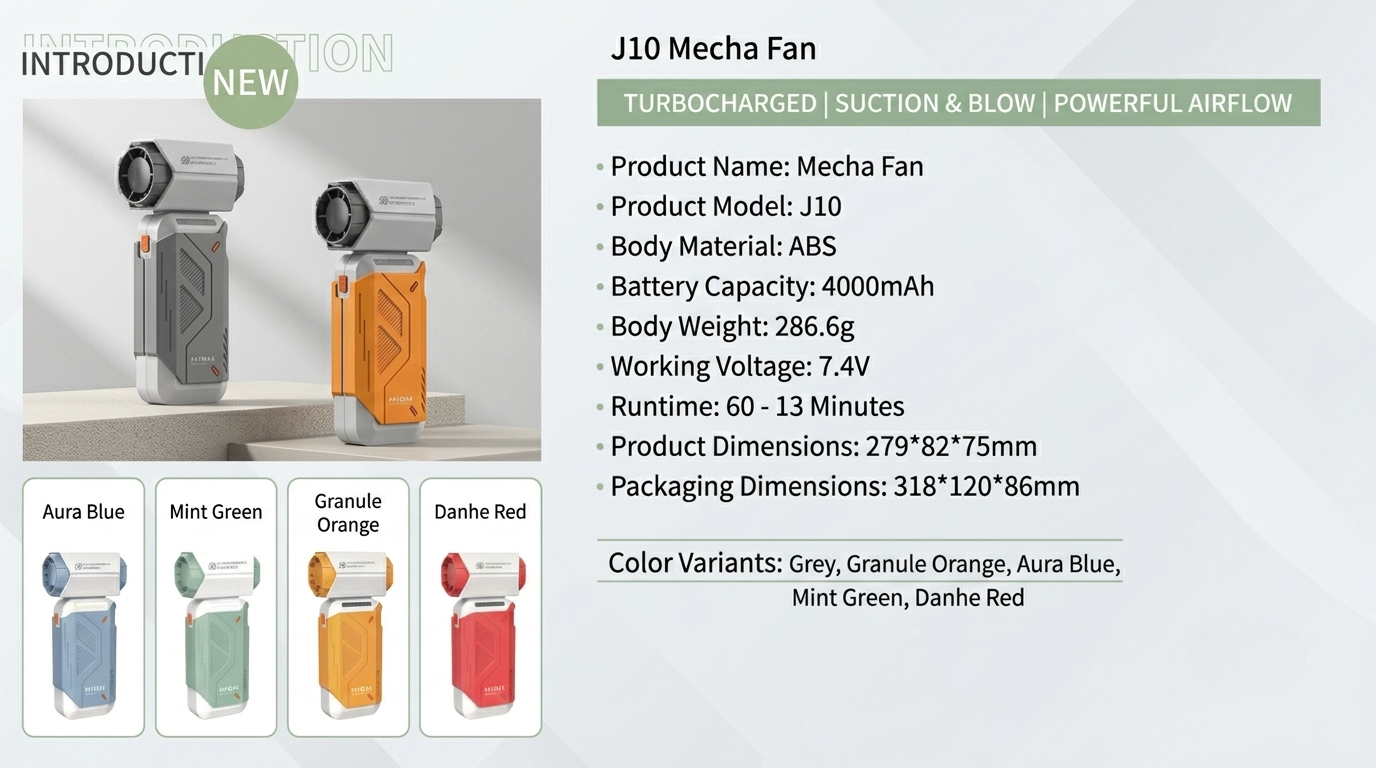
In the handheld electronics sector, branded handheld fan customization extends beyond simple logo placement. Sourcing teams commonly evaluate three distinct levels of customization: surface branding (logos and text), aesthetic exterior modifications (custom colors and finishes), and structural or packaging integration (accessories, user manuals, and regional compliance markings). High-speed mecha fans feature compact enclosures, internal motor brackets, and specific air duct geometries, which means cosmetic modifications must respect internal tolerances and structural integrity.
When sourcing custom branded fans, buyers usually consider factory production parameters and minimum order quantities. Experienced OEM/ODM manufacturers, such as XMT Global (Xinmeili Technology) in Dongguan, Guangdong, China, operate facility spaces exceeding 3,000 square meters with monthly capacities over 150,000 units. For standard OEM branding projects, production baselines typically start at a minimum order quantity (MOQ) of 500 units with standard production lead times around 15 days. Early alignment on technical parameters helps prevent cosmetic defects, alignment errors, and adhesion failures during mass production.
Logo Application Techniques and Surface Compatibility
Applying brand assets to a handheld high-speed fan requires selecting an application method that suits the housing material and surface curvature. Common logo customization techniques include:
- Silk Screen Printing: Suitable for single-color or two-color flat logos. It offers clear edges and cost efficiency, but requires smooth surface areas for uniform ink adhesion.
- Pad Printing (Tampo Printing): Ideal for curved, textured, or recessed surfaces common on mecha-style handheld fan housings. Pad printing conforms well to subtle surface angles.
- Laser Engraving: Commonly applied to metallic accents or dark plastic parts. Laser marking alters the surface material directly, providing high wear resistance without adding thickness.
- Metallic / Epoxy Badging: Involves applying a pre-formed metal or resin emblem into a molded recess on the fan body for a tactile finish.
Before approving an artwork proof, sourcing teams typically evaluate production samples using standard cross-hatch tape tests and alcohol rub tests to confirm logo durability against everyday handling and skin oils.
Color Options and Custom Housing Finishes
Housing color defines the primary visual identity of a handheld fan. Standard plastic injection molding uses raw resin mixed with specific color masterbatches. When selecting custom color options, buyers should account for the following technical considerations:
- Pantone Matching: Plastic masterbatch matching allows precise color reproduction (such as Pantone PMS references). Buyers should confirm sample approval under standardized light sources, as translucent or metallic additives can shift the visual hue.
- Surface Coatings and Treatments: Matte spray painting, soft-touch rubberized coatings, or UV gloss coats alter both tactile feel and scratch resistance. High-speed fans with ergonomic grips often utilize matte or semi-textured finishes to reduce fingerprint visibility.
- Multi-Tone & Accents: Mecha-style handheld fans often feature multi-piece housings. Individual components (air outlet rings, buttons, side accents) can be molded in contrasting colors without requiring secondary painting processes.
Custom Packaging and Regulatory Compliance Integration
Complete OEM branding extends to retail presentation and mandatory regulatory markings. Custom packaging options typically include printed color gift boxes, internal protective trays (PET or molded pulp), user instruction manuals, and branded accessories like charging cables or lanyards.
Importantly, regional market entry requires clear placement of required certification symbols on both the physical housing and packaging. Verified product certifications commonly required by international sourcing teams across 30+ export markets include:
- CE & UKCA: Required for European and UK market distribution.
- FCC: Required for electromagnetic compatibility compliance in the United States.
- RoHS: Ensures restriction of hazardous substances in electronic components.
- UN38.3: Mandatory transport safety certification for lithium battery shipping.
- CCC, PSE, & KCC: Key compliance marks for China, Japan, and South Korea respectively.
Customization Comparison: Pathways and Production Parameters
The following table compares common customization pathways based on preparation complexity, typical lead factors, and technical considerations:
| Customization Type | Preparation Complexity | Primary Technical Consideration | Standard Production Factors |
|---|---|---|---|
| Logo Printing | Low (Artwork vectors & film prep) | Surface curvature radius and ink adhesion durability | Applicable at standard 500-unit MOQ |
| Custom Color Shells | Moderate (Masterbatch color matching) | Color consistency across separate molded housing components | Requires masterbatch approval before mass molding |
| Custom Packaging & Manuals | Low to Moderate (Dieline layout & print proofing) | Correct placement of CE, FCC, RoHS, UN38.3, and PSE marks | Requires dieline validation to avoid transit movement |
| Custom Component Finishes | Moderate to High (Secondary spray coating or plating) | Surface scratch resistance and coating thickness tolerances | Evaluated during pre-production sample testing |
Common Mistakes in Handheld Fan Branding Projects
- Ignoring Surface Radius: Requesting large silk-screen logos on highly curved mecha housings can cause graphic distortion or uneven ink distribution.
- Omitting Mandatory Certification Symbols: Planning packaging without reserving space for CE, FCC, RoHS, UKCA, or PSE icons can delay custom clearance or require costly packaging stickering.
- Underestimating Masterbatch Sample Time: Custom color resin matching requires physical sample runs and visual verification, which should be factored into overall project timelines alongside the typical 15-day mass production lead time.
Frequently Asked Questions
What is the typical minimum order quantity (MOQ) for customized handheld fans?
For standard OEM branding projects such as logo printing and customized retail packaging, minimum order quantities typically start at 500 units.
What is the standard production lead time for custom fan orders?
Once pre-production samples and artwork proofs are approved, standard mass production lead time is approximately 15 days.
Which regulatory certifications should be included on custom packaging?
Depending on the target market, packaging and fan bodies typically feature markings such as CE, RoHS, FCC, UN38.3, UKCA, CCC, PSE, or KCC.
How are custom colors matched for plastic housings?
Custom colors are achieved by mixing color masterbatches with raw resin according to specified Pantone references, followed by sample molding and visual inspection.