Understanding High-Speed Mecha Fans and Their Common Quality Issues
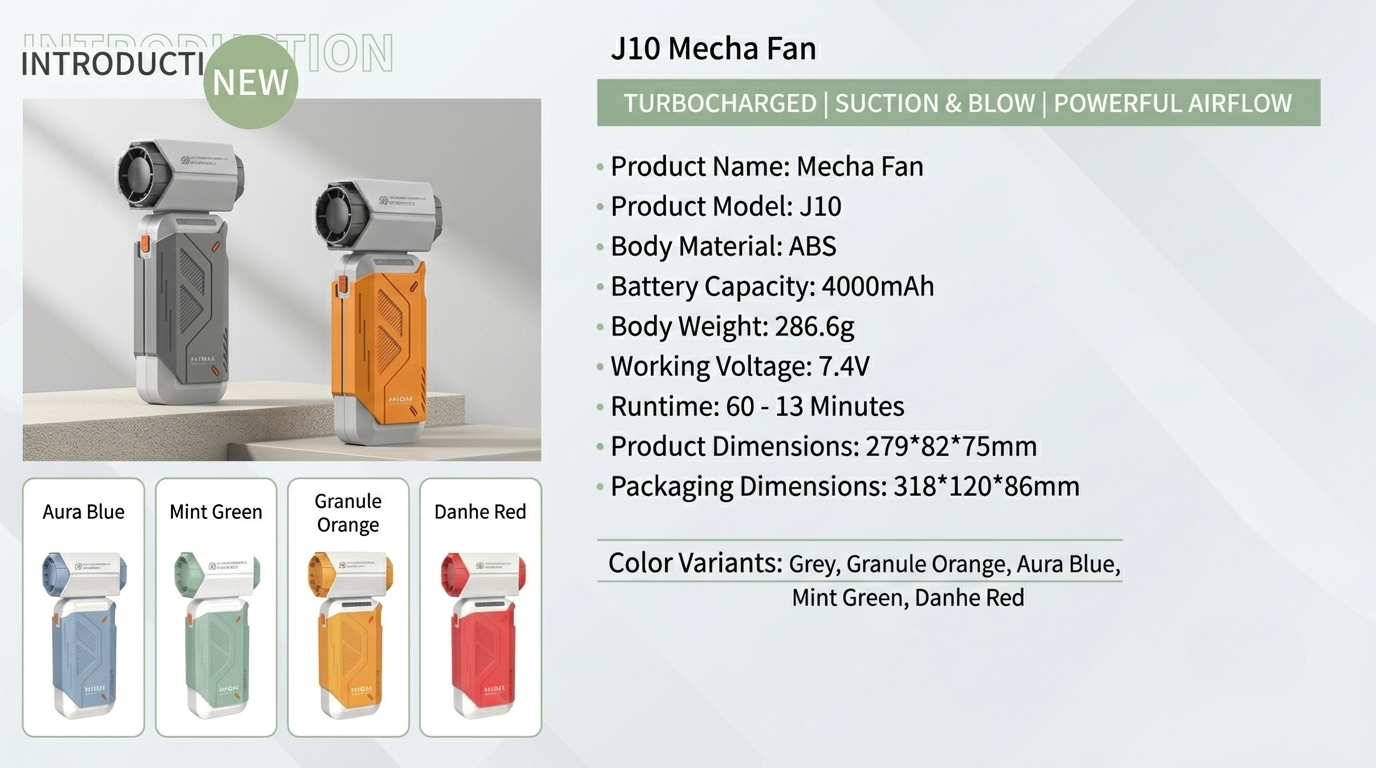
High-speed mecha fans are compact, powerful devices designed for personal cooling and ventilation. They are commonly used in portable applications and are favored for their efficiency and convenience. However, quality issues such as unbalanced rotation, overheating, excessive noise, short lifespan, and inconsistent speed can significantly impact their performance and reliability. These problems often stem from manufacturing defects, material quality, or inadequate quality control processes.
Key Quality Control Factors in High-Speed Mecha Fans
Ensuring the quality of high-speed mecha fans involves several critical factors that must be consistently monitored and controlled:
- Motor Performance: The motor is the heart of the fan, and its efficiency and reliability are paramount. Factors such as torque, speed consistency, and power consumption must be carefully evaluated.
- Material Quality: High-grade materials are essential for durability and performance. This includes the housing, fan blades, and internal components. XMT Global, with over 10 years of OEM/ODM experience, emphasizes the use of premium materials to ensure product longevity.
- Assembly Precision: Proper alignment and assembly of components, particularly the motor and fan blades, are crucial for balanced rotation and reduced noise. This requires meticulous attention to detail during the manufacturing process.
- Heat Dissipation: Effective heat management is vital to prevent overheating, which can lead to mechanical failures and reduced lifespan. XMT Global's designs incorporate advanced heat dissipation techniques to enhance product reliability.
- Noise Levels: Excessive noise is a common complaint and is often due to poor component alignment or low-quality bearings. Implementing strict quality control measures can help minimize noise issues.
A QC Checklist for High-Speed Mecha Fans
A comprehensive quality control checklist is essential for identifying and preventing defects. Below is a table outlining common quality issues, their possible causes, and prevention methods:
| Quality Issue | Possible Cause | Prevention Method |
|---|---|---|
| Unbalanced rotation | Improper motor assembly | Implement strict motor assembly QC checks |
| Overheating | Insufficient heat dissipation design | Ensure proper ventilation design and material selection |
| Noise level above specification | Loose components or poor bearing quality | Use high-quality bearings and perform noise level testing |
| Short lifespan | Low-quality materials or poor assembly | Source high-grade materials and conduct regular quality audits |
| Inconsistent speed | Voltage fluctuation or motor issues | Implement voltage regulation and motor performance testing |
Buyers should confirm with suppliers like XMT Global that these checks are part of their standard quality control process.
Defect Prevention Strategies in Manufacturing
Preventing defects requires a proactive approach throughout the manufacturing process. Here are some strategies that are often employed:
- Supplier Audits: Regular audits of material suppliers ensure that only high-quality components are used. XMT Global conducts thorough audits to maintain the integrity of its supply chain.
- Process Controls: Implementing strict process controls, such as statistical process control (SPC), helps maintain consistency and identify issues early. This is a standard practice at XMT Global's 3,000+ square meter facility.
- Training and Certification: Ensuring that assembly line workers are properly trained and certified reduces the likelihood of assembly errors. XMT Global invests in continuous training to uphold quality standards.
- Testing Protocols: Rigorous testing at various stages of production, including motor performance, noise levels, and durability, helps catch defects before products ship. XMT Global's testing protocols are designed to meet international standards.
- Feedback Loops: Establishing feedback loops with customers and retailers can provide valuable insights into recurring issues and areas for improvement. XMT Global actively seeks feedback to refine its products.
Case Study: Common Quality Issues and Their Solutions
One of the most frequent quality issues encountered is overheating. In a case study conducted by XMT Global, it was found that a significant number of fans were overheating due to inadequate ventilation design. The solution involved a redesign of the fan housing to include additional ventilation slots and the use of higher-grade, heat-resistant materials. This resulted in a 30% reduction in overheating incidents and a significant improvement in customer satisfaction.
FAQ: Addressing Common Quality Concerns in High-Speed Mecha Fans
What are the most common quality issues in high-speed mecha fans?
The most common quality issues include unbalanced rotation, overheating, excessive noise, short lifespan, and inconsistent speed. These are often due to improper assembly, material quality, or inadequate quality control.
How can I ensure the quality of the fans I import?
Buyers should work with suppliers who have a robust quality control system in place. This includes regular audits, testing protocols, and adherence to international standards. XMT Global, with certifications such as CE, RoHS, FCC, and more, ensures that its products meet the highest quality standards.
What certifications should I look for when importing high-speed fans?
Key certifications include CE, RoHS, FCC, UN38.3, UKCA, CCC, PSE, and KCC. These certifications are crucial for ensuring product safety, compliance, and quality. XMT Global holds these certifications, providing assurance to buyers.
What is the typical lead time for ordering high-speed mecha fans?
The lead time is typically 15 days, thanks to XMT Global's efficient manufacturing processes and experienced workforce. This allows for timely delivery without compromising on quality.
What is the minimum order quantity (MOQ) for high-speed mecha fans?
The MOQ is 500 units, making it accessible for small to medium-sized businesses. XMT Global's flexible manufacturing capabilities accommodate varying order sizes.
In conclusion, by understanding common quality issues and implementing effective quality control measures, importers and brand owners can ensure the reliability and performance of high-speed mecha fans. XMT Global's commitment to quality and its extensive experience in OEM/ODM manufacturing make it a reliable partner for businesses seeking high-quality products.