Understanding High-Speed Mecha Fans and Their Components
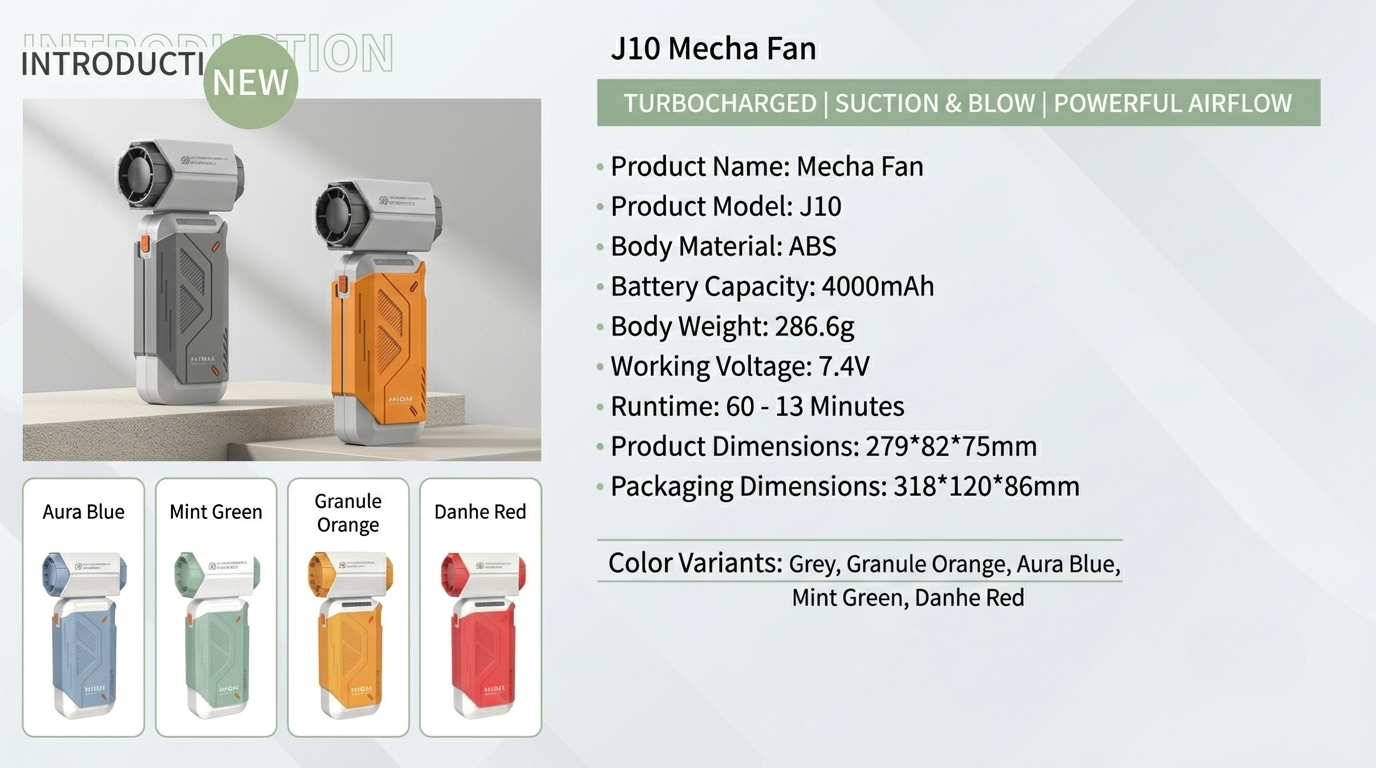
High-speed mecha fans are compact, handheld devices designed for personal cooling and ventilation. These fans typically consist of a motor, fan blades, a housing, a power source, and control components. The motor is often a brushless DC motor for efficiency and longevity, while the fan blades are usually made of lightweight, durable materials like ABS plastic or aluminum. Understanding these components is essential for identifying potential quality issues and implementing effective quality control measures.
Common Quality Issues in High-Speed Mecha Fans
Buyers should be aware of several common quality issues that can arise in high-speed mecha fans, which can affect the fan's performance, durability, and overall user experience. Below is a table outlining these issues, their possible causes, and prevention methods:
| Quality Issue | Possible Cause | Prevention Method |
|---|---|---|
| Overheating | Insufficient cooling design, poor quality motor | Ensure proper ventilation design, use high-quality motors |
| Noise Levels | Loose components, unbalanced fan blades | Tighten all screws, balance fan blades during assembly |
| Vibration | Misalignment of components, poor quality bearings | Use precision manufacturing techniques, source high-quality bearings |
| Reduced Airflow | Clogged filters, worn-out fan blades | Regular maintenance, use durable materials for fan blades |
| Electrical Issues | Poor wiring, low-quality components | Implement strict wiring standards, use certified components |
Quality Control Checklist for High-Speed Mecha Fans
A comprehensive QC checklist is critical for maintaining consistent product quality. The following items should be included in the checklist:
- Motor Performance: Assess the motor's speed, torque, and power consumption to ensure it meets specifications.
- Fan Blade Balance: Verify that the fan blades are balanced to minimize noise and vibration.
- Housing Integrity: Inspect the housing for cracks, warping, and proper assembly.
- Electrical Safety: Check for wiring integrity, insulation, and compliance with safety standards.
- User Interface: Test buttons, switches, and indicators to confirm functionality.
- Durability Testing: Conduct stress tests for drop, impact, and environmental resistance.
Defect Prevention Strategies in Manufacturing
To minimize defects, manufacturers should implement the following strategies:
- Supplier Quality Management: Source components from reliable suppliers with a proven quality track record.
- Process Control: Establish and adhere to strict process controls and standard operating procedures (SOPs).
- Employee Training: Provide ongoing training to employees on quality standards and defect prevention techniques.
- Quality Inspections: Conduct regular inspections at each stage of production, from component sourcing to final assembly.
- Feedback Loops: Create feedback loops with customers and suppliers to quickly identify and address quality issues.
Key Factors in Selecting a Reliable Supplier
Buyers should consider these factors when choosing a supplier for high-speed mecha fans:
- Experience: The supplier should have 10+ years of experience in high-speed mecha fan manufacturing.
- Capacity: The supplier must have the capacity to produce at least 150,000 units per month.
- Quality Standards: Verify that the supplier complies with international quality standards such as CE, RoHS, FCC, UN38.3, UKCA, CCC, PSE, and KCC.
- Track Record: Review the supplier's history with international clients and request references if possible.
- Documentation: The supplier should provide detailed QC documentation and be willing to collaborate on quality issues.
The table below summarizes these key factors:
| Factor | Description |
|---|---|
| Experience | Supplier should have 10+ years of experience in manufacturing. |
| Capacity | Supplier should produce 150,000+ units/month. |
| Quality Standards | Supplier should hold certifications like CE, RoHS, FCC, UN38.3, UKCA, CCC, PSE, and KCC. |
| Track Record | Supplier should have a proven track record with international clients and positive references. |
| Documentation | Supplier should provide detailed QC documentation and support on quality issues. |
Troubleshooting and Maintenance Tips
Regular maintenance and troubleshooting can extend the life of high-speed mecha fans and ensure optimal performance. Here are some tips:
- Clean the fan blades and housing regularly to prevent dust buildup.
- Check for loose screws or components and tighten them as needed.
- Inspect the power source and replace batteries or recharge batteries as necessary.
- Ensure the fan is stored in a dry, cool environment to prevent damage.
- Refer to the user manual for specific maintenance instructions and troubleshooting guidance.
Frequently Asked Questions
1. What certifications should a reliable supplier have?
Buyers should confirm that the supplier holds CE, RoHS, FCC, UN38.3, UKCA, CCC, PSE, and KCC certifications to ensure compliance with international standards.
2. How can I verify the supplier's experience?
Buyers should request the supplier's portfolio, client references, and manufacturing history to assess their experience.
3. What is the typical lead time for high-speed mecha fans?
The standard lead time is 15 days for most orders.
4. What is the minimum order quantity (MOQ)?
The MOQ is 500 units for most suppliers.
5. How can I ensure consistent quality?
Buyers should work with suppliers who implement strict quality control measures, provide detailed QC documentation, and have a strong track record of compliance with international standards.
In conclusion, understanding the common quality issues in high-speed mecha fans and implementing effective quality control measures can help buyers ensure they receive a reliable product. By selecting a supplier with a strong track record, buyers can mitigate risks and maintain consistent product quality.