Understanding the Customization Scope for High-Speed Handheld Fans
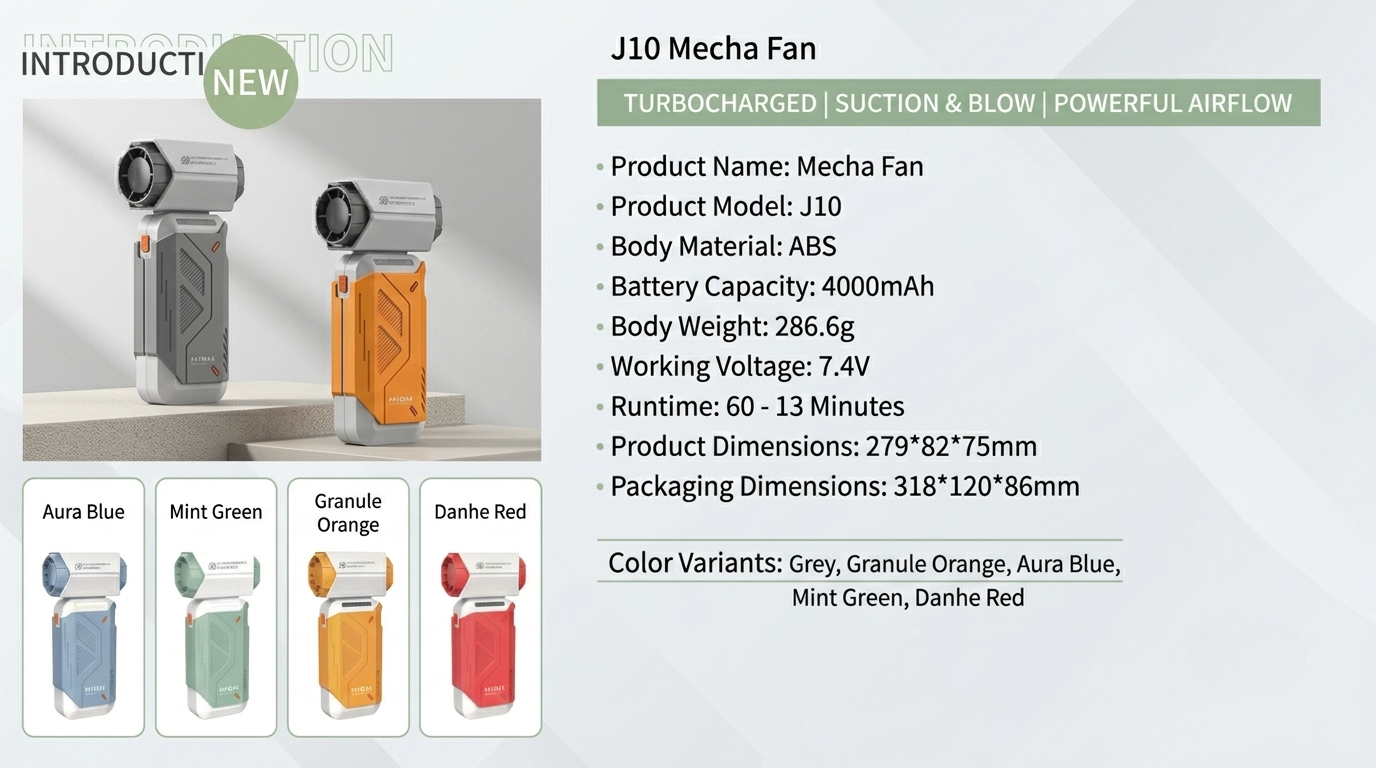
For sourcing managers and brand owners, branded handheld fan customization involves balancing design requirements with the physical constraints of high-speed mecha-style hardware. As an OEM/ODM manufacturer based in Dongguan, XMT Global (Xinmeili Technology) observes that customization is generally divided into aesthetic modifications—such as color and logo placement—and functional specifications like battery capacity or motor RPM parameters. Understanding the production feasibility of each method is necessary before finalizing a bill of materials (BOM) to ensure the project remains within the standard 15-day lead time for production.
Surface Finishing and Color Options
The choice of surface treatment significantly affects both the durability and the perceived quality of the final product. High-speed fans typically utilize ABS or PC plastic housings, which can be modified through several standard industry processes.
- ABS Injection Molding (Base Color): The most cost-effective method. The plastic resin is dyed before injection, ensuring the color is consistent throughout the material. This is highly resistant to scratches and is the standard for high-volume production.
- Metallic Spray Painting: Commonly used to achieve a premium, metallic look. This process requires a primer layer to ensure adhesion to the plastic housing.
- Electroplating (Vacuum Metallization): Provides a highly reflective, metallic finish. While visually striking, this process can be more sensitive to fingerprint oils and friction compared to standard matte finishes.
Buyers should confirm with the supplier regarding the specific plastic resin grades (e.g., impact-resistant ABS) to ensure that surface treatments do not compromise structural integrity.
Logo Branding Techniques and Placement Considerations
Selecting the correct logo application method depends on the material, the complexity of the brand artwork, and the required durability. XMT Global commonly manages projects with a minimum order quantity (MOQ) of 500 units for branded customization. The following table summarizes the primary methods used in OEM branding.
| Method | Durability | Unit Cost Impact | Detail Accuracy | Tooling/MOQ Impact |
|---|---|---|---|---|
| Silk Screen | Moderate | Low | Medium | Low |
| Pad Printing | Moderate | Low | High | Low |
| Laser Engraving | High | Medium | High | None (Direct) |
| Mold Injection Logo | Very High | High | Low (Shape limited) | High (Requires mold change) |
Compliance and Regulatory Standards
When customizing high-speed fans, brand owners must ensure that modifications do not void necessary safety certifications. As an OEM/ODM manufacturer with over 10 years of experience, XMT Global emphasizes that any changes to the internal architecture—such as battery housing or circuit board layouts—require re-validation. Standard products produced in our Dongguan facility typically align with CE, RoHS, FCC, UN38.3, UKCA, CCC, PSE, and KCC standards. Sourcing teams should verify that their specific customization requests, particularly those involving battery capacity changes, still comply with these regional regulatory requirements.
Technical Trade-offs and Tooling Considerations
Modifying a standard "mecha" fan design requires careful consideration of tooling costs. If a brand owner requests a custom shape or a change to the physical housing, this necessitates new injection molds, which is a significant capital expenditure compared to simple logo printing or color changes. Furthermore, structural changes may impact airflow dynamics. High-speed fans rely on precise turbine geometry; altering the housing dimensions or air intake vents can inadvertently create noise issues or reduce the effective wind speed. Sourcing teams should request a prototype evaluation to verify that any physical customization does not degrade fan performance.
Common Mistakes When Ordering Branded Handheld High-Speed Fans
- Ignoring Material Limitations: Attempting to apply complex multi-color logos to curved surfaces without proper pad printing masks, which can lead to misalignment and increased rejection rates.
- Overlooking Regulatory Compliance: Assuming that changing the housing material or internal battery placement does not require re-testing for certifications like CE, RoHS, or FCC.
- Underestimating Lead Times for Custom Tooling: Failing to account for the additional weeks required for mold creation and testing when moving away from a "white-label" stock design.
- Ignoring Battery Constraints: Requesting higher power output than the battery cell's discharge rate (C-rating) can safely handle, which can lead to overheating or shortened product lifespan.
Frequently Asked Questions
What is the standard lead time for OEM projects?
For standard branded customization, the typical lead time from XMT Global is 15 days. This assumes that the design files are approved and the project does not require new structural tooling or mold changes.
What is the minimum order quantity (MOQ) for branded fans?
The standard MOQ for OEM branding services is 500 units. This volume allows for efficient setup of printing equipment while maintaining production stability.
What is the difference between pad printing and laser engraving for logo placement?
Pad printing uses a silicone pad to transfer ink from an etched plate to the fan surface, allowing for multi-color logos. Laser engraving removes a thin layer of the material surface, creating a permanent, high-contrast mark that is highly durable but typically limited to a single color.
Can I change the motor speed settings for my brand?
Yes, firmware customization is possible for high-speed fans. You can specify the RPM levels and the behavior of any digital displays. However, these changes must stay within the safety limits of the motor and battery components to ensure operational stability.